The Complete Guide to Wall Cladding Tiles for Kerala Homes: Elevation & Feature Walls
Selecting high-performance wall cladding tiles requires balancing outdoor weather resistance with interior architectural texture. For Kerala’s climate, installing full-body vitrified wall cladding tiles and porcelain stone-finish slabs featuring water absorption rates below 0.05% prevents monsoon moisture seepage, surface efflorescence, fungal growth, and tile detachment.
Sourcing certified wall cladding tiles from an authorized distributor like Kurikkal Ambiente on Mavoor Road guarantees direct access to premium collections—including Kajaria Eternity, Nexion, and Orientbell—backed by live surface display mockups, specialized tile adhesive recommendations, and reliable local delivery. Explore the complete collection of authentic wall tiles at Kurikkal to transform your exterior elevations, living room feature walls, and courtyard facades.
Table of Contents
- The Architectural Value of Wall Cladding in Tropical Homes
- Material Science: Vitrified Cladding vs. Natural Stone vs. Paint
- Comparison Matrix: Exterior & Interior Wall Surface Materials
- High-Impact Wall Cladding Application Zones
- 1. Exterior Elevation & Front Facades
- 2. Living Room TV Accent & Feature Walls
- 3. Open Courtyard (Nadumuttam) & Garden Walls
- 4. Pillar Cladding & Boundary Gate Wall Accents
- Technical Installation Checklist: Chemical Adhesives & Mechanical Cladding
- Why Kurikkal Ambiente is Malabar’s Premier Cladding Destination
- Frequently Asked Questions (FAQs)
- Conclusion
The Architectural Value of Wall Cladding in Tropical Homes
In modern Malabar architecture, wall surfaces do more than divide spaces—they define the visual identity of a home. Wall cladding tiles serve as a protective shield against aggressive atmospheric elements while introducing rich tactile textures like natural slate, sandstone, exposed brick, and oxidized metal.
Exterior Wall Protection Dynamics
Standard Exterior Paint: Absorbs rainwater → Peeling, blistering & black mold within 2–3 monsoon seasons
Natural Sandstone/Cladding: Absorbs ground moisture → Efflorescence salt leaching & lichen growth
Full-Body Vitrified Cladding: 0.05% Water absorption → UV-stable & immune to moss, saltpeter & cracking
The Problem with Painted & Porous Exterior Walls
Exterior walls in Kerala endure months of heavy monsoon rain followed by harsh tropical sun exposure. Standard exterior paints trap sub-surface wall moisture, leading to bubbling, peeling, and unsightly black fungal patches within two to three years. Natural porous stones like unsealed slate or sandstone tend to absorb rainwater, causing white salt deposits (efflorescence) to leach out onto the facade.
The Vitrified & Porcelain Cladding Advantage
Engineered full-body vitrified wall tiles are pressed under immense hydraulic force and fired above 1200°C. Their completely dense, non-porous body blocks water ingress, ensuring that moss cannot anchor, colors do not fade under direct UV radiation, and exterior facades stay clean and maintenance-free for decades.
Material Science: Vitrified Cladding vs. Natural Stone vs. Paint
Understanding material density, thermal expansion, and water absorption ensures your wall surfaces withstand intense monsoon downpours.
- Impervious Water Absorption (<0.05%): High-density porcelain and vitrified body construction prevents moisture from penetrating behind the tile, protecting internal brickwork and plaster from dampness.
- UV & Color Permanence: Fused ceramic mineral pigments remain unaffected by direct sunlight, stopping color fading, yellowing, or surface chalking over time.
- Thermal Shock Resistance: Engineered cladding tiles expand and contract minimally during rapid temperature shifts (from intense midday solar heat to heavy evening rain), preventing surface glaze cracking and debonding.
To review official international performance standards and testing methods for ceramic wall tiles, consult the ISO 13006 Standard for Ceramic Tiles Definitions, Classification, and Characteristics.
Comparison Matrix: Exterior & Interior Wall Surface Materials
|
Performance Feature |
Vitrified Wall Cladding Tile |
Natural Stone Cladding (Slate/Granite) |
Premium Exterior Weather Paint |
|
Water Absorption Rate |
Below 0.05% (Impervious) |
1.0% – 5.0% (Porous) |
High (Micro-porous paint film) |
|
Moss & Mold Resistance |
Superior (Wipes clean effortlessly) |
Poor (Traps algae in natural pits) |
Poor (Develops black fungal stains) |
|
UV & Color Stability |
100% UV Proof (Never fades) |
Fades / Darkens naturally |
Fades and peels within 3–5 years |
|
Maintenance Requirement |
Zero (Occasional water hose down) |
High (Requires chemical sealers) |
High (Requires periodic repainting) |
|
Flexural Body Strength |
High (>2000 Newtons) |
Variable (Prone to flaking) |
N/A |
|
Surface Textures Available |
Punch Slate, 3D Wave, Brick, Wood |
Natural Split-Face Rough |
Flat Smooth / Basic Texture |
High-Impact Wall Cladding Application Zones
Integrating textured wall tiles across key focal points creates visual depth and elevates curb appeal.
High-Impact Cladding Zones
Front Facades & Elevation: 3D Punch stone & wood-plank vitrified tiles
Living Room Accent Walls: Book-matched marble-look porcelain slabs & metallic tiles
Internal Courtyards (Nadumuttam): Slate-texture & exposed brick vitrified tiles
Pillars & Boundary Gates: Heavy-duty full-body stone pavers with corner mitering
1. Exterior Elevation & Front Facades
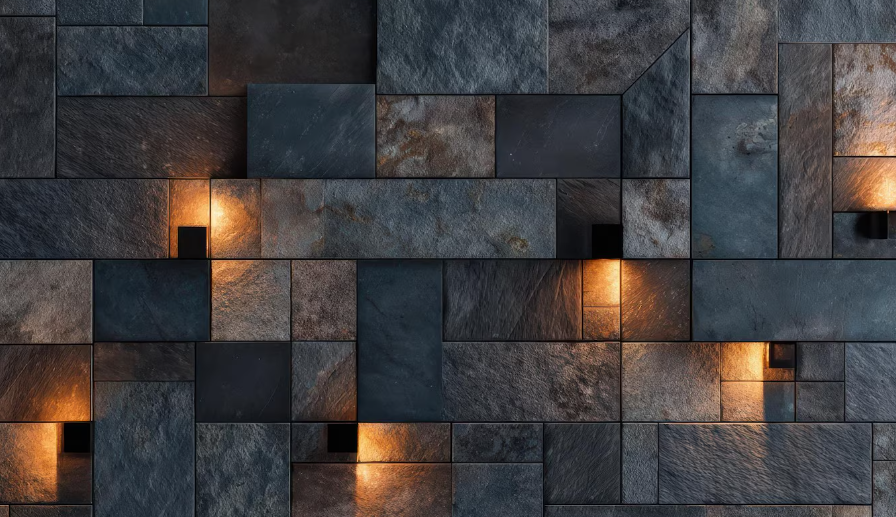
Elevate your home's exterior by framing cantilevered balcony walls, porch overhangs, or main entryways with 3D punch stone-look or wood-plank vitrified tiles. Combining warm timber tones with dark slate cladding creates a striking modern tropical facade.
2. Living Room TV Accent & Feature Walls
Inside the home, large-format 1200x2400mm porcelain slabs with Statuario or Laurent Black marble veining create luxurious backdrop walls behind TV units and dining spaces. Their smooth, polished surfaces reflect indoor ambient lighting beautifully.
3. Open Courtyard (Nadumuttam) & Garden Walls
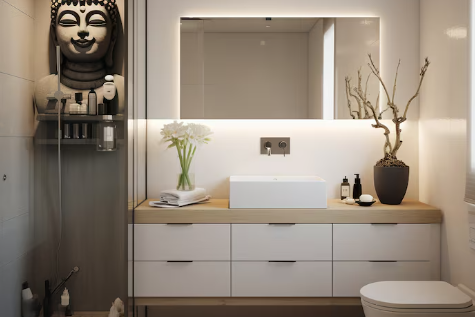
Open-to-sky courtyards receive both direct rain and sunlight. Installing moss-proof slate or terracotta-finish vitrified cladding tiles along courtyard walls adds natural rustic charm without the maintenance hassle of real stone. When planning your indoor and outdoor wall cladding layouts, coordinating your wall tiles with matching bathroom products in Calicut ensures complete design harmony across all wet areas and feature walls in your home.
4. Pillar Cladding & Boundary Gate Wall Accents
Cladding structural gate pillars and entrance walls with full-body vitrified stone tiles creates an inviting entry while protecting vulnerable boundary structures against mud splatters, car exhaust soot, and rain erosion.
Technical Installation Checklist: Chemical Adhesives & Mechanical Cladding
Installing heavy wall cladding tiles safely requires proper surface preparation, high-bond polymer adhesives, and mechanical anchors for high elevations. Follow this expert installation checklist:
- Prepare Wall Plaster Surface: Ensure the underlying brick or concrete wall plaster is fully cured, flat, structurally sound, and free of dust, grease, or loose cement slurry.
- Use High-Bond Exterior Polymer Adhesive: Never install wall tiles using standard sand-cement mortar, especially on outdoor or elevated walls. Always use polymer-modified high-bond tile adhesive (Class C2TE S1/S2) that absorbs thermal movement without cracking.
- Apply Both Surface & Back Buttering: Apply adhesive to the wall surface using a notched trowel and spread a thin layer of adhesive directly onto the back of each tile (double-buttering) to eliminate air voids that trap water behind tiles.
- Use Mechanical Clamping for Heights Above 10 Feet: When installing large-format porcelain slabs at elevations above 10 feet (3 meters), use stainless steel mechanical safety clips embedded into tile slots alongside high-grade chemical adhesive.
Why Kurikkal Ambiente is Malabar’s Premier Cladding Destination
Selecting the ideal wall cladding tiles requires working with an authorized distributor who guarantees authentic material quality, shade consistency, and technical installation guidance.
Since starting operations in 1981, Kurikkal Ambiente has grown into Northern Kerala's premier source for luxury building materials, imported tiles, modular kitchens, and bathware. Homeowners, architects, and civil contractors across Malabar rely on Kurikkal for several key reasons:
- Authorized Multi-Brand Showroom: Access 100% genuine, factory-warranted wall tile collections from international and national tile leaders, including Kajaria Eternity, Nexion, Orientbell, and AGL.
- Live Display Studios on Mavoor Road: Visit the flagship Kurikkal Ambiente showroom in Calicut to explore full-scale elevation mockups, feel real 3D punch stone textures, and view tile colors under natural sunlight.
- Decades of Regional Expertise: Kurikkal’s expert team brings over 40 years of local retail experience, helping clients choose cladding weights, waterproof adhesives, and installation techniques suited to Kerala's climate.
- Complete One-Stop Destination: Effortlessly match your exterior wall cladding with floor tiles, sanitaryware, modular kitchen setups, and luxury bath fittings under one roof.
Frequently Asked Questions (FAQs)
1. Are vitrified wall cladding tiles better than natural stone cladding in Kerala?
Yes. Full-body vitrified cladding tiles feature water absorption rates below 0.05%, making them completely immune to moss growth, efflorescence salt leaching, and cracking caused by heavy monsoon rain. Natural stone is porous and requires regular chemical sealing to prevent staining and fungal growth.
2. Can large-format porcelain tiles be installed on exterior building elevations?
Yes. Large-format porcelain slabs can be installed on exterior elevations up to 10 feet using high-bond C2TE polymer adhesives. For heights above 10 feet, combine chemical adhesives with mechanical stainless steel safety clamps.
3. How do I clean and maintain exterior wall cladding tiles?
Because vitrified wall tiles are non-porous and dirt-resistant, they require virtually no maintenance. Simply wash them down occasionally with a hose or pressure washer to clear surface dust and mud splatters.
4. Where can I see elevation tile mockups and wall cladding displays in Calicut?
You can explore full-scale elevation mockups, 3D stone-textured tiles, and large-format porcelain slabs at Kurikkal Ambiente, located at Saubhagya Shopping Complex, Mavoor Road, Calicut.
Conclusion
Upgrading your home with high-performance wall cladding tiles is a smart investment in long-term structural protection, low maintenance, and striking curb appeal. By choosing non-porous vitrified construction, UV-resistant finishes, and specialized polymer adhesives, you ensure your exterior facades and interior feature walls stay clean, vibrant, and beautiful through every season.
Explore the complete collection of authentic wall tiles at Kurikkal or visit Kurikkal Ambiente on Mavoor Road, Calicut, today to consult with expert tile specialists and select the perfect cladding for your dream home!