Choosing Your Kitchen Countertop Material: The Heat-Resistant Guide
Selecting the right kitchen countertop materials is a critical decision, especially in a busy Kerala kitchen where daily cooking often involves high heat and strong spices. This guide will focus on how materials like Granite, Quartz, and Marble handle heat, stains, and the daily wear and tear to help you make a smart, lasting choice for your home.
Why Heat Resistance is Crucial in a Kitchen
Your kitchen counter is the central workspace, not just a display surface. The cooking styles in Kerala often mean hot utensils come into direct contact with the surface. Using a hot tawa or a pressure cooker fresh off the stove requires a counter that can handle the temperature shock without cracking or scorching.
In hot and humid climates, a heat-resistant surface is also less likely to expand and contract dramatically, which helps maintain the integrity of the joins and sealant over time. Choosing poor countertop materials can lead to permanent burn marks or warping, quickly ruining the look and value of your kitchen.
Comparing Top Countertop Materials for Kerala Homes
The three most popular countertop materials—Granite, Quartz, and Marble—all offer distinct features. Here is how they compare specifically for durability, heat, and daily life in a Kerala kitchen.
1. Granite: The Champion of Natural Heat Resistance
Granite is a natural stone formed under intense heat and pressure deep within the earth. This makes it the most heat-resistant option you can choose.
- Heat Performance: Granite can withstand very high temperatures (up to 480°F or 250°C). You can often place a hot pot directly on the surface without immediate damage.
- Daily Use: It is highly durable and scratch-resistant, but being a natural stone, it is porous and requires sealing periodically (usually once a year) to resist stains from oils, turmeric, and acid.
- The Verdict for Kerala: Excellent choice for heavy, daily cooking due to its high heat tolerance.
2. Quartz: The Modern, Low-Maintenance Choice
Quartz is an engineered material made from crushed natural quartz crystals mixed with resins (polymers). This engineering gives it a non-porous finish, which is great for hygiene.
- Heat Performance: Quartz is less heat-resistant than granite. The resin binders can be damaged, melt, or discolor if exposed to direct, excessive heat (around 150°F to 200°F). Always use a trivet for hot pots.
- Daily Use: It is non-porous, meaning it never needs sealing and is highly resistant to stains and bacteria. It offers consistent colours and patterns.
- The Verdict for Kerala: Ideal for those who prioritize a non-porous, easy-to-clean, modern, and low-maintenance surface, provided they consistently use heat protection (trivets).
3. Marble: The Luxurious, High-Care Option
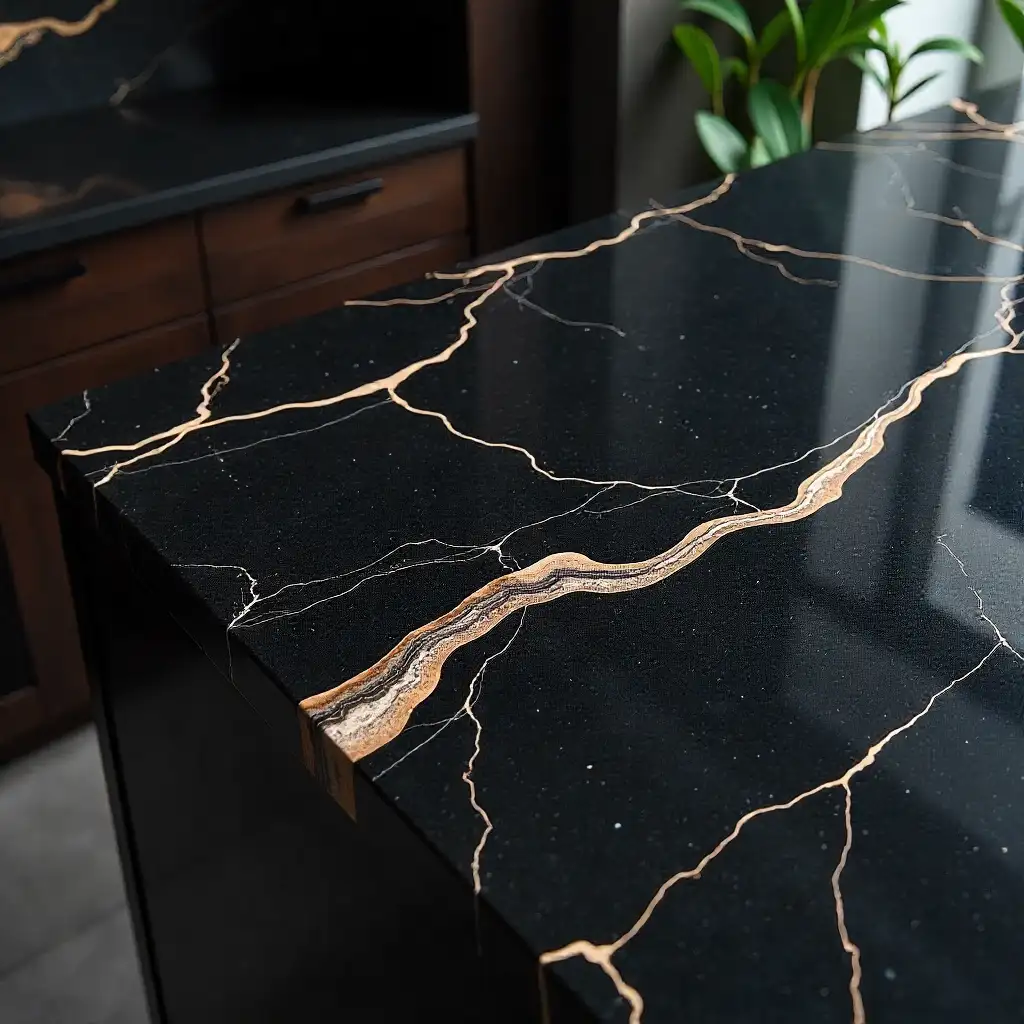
Marble is a beautiful natural stone known for its elegant veining and luxurious look.
- Heat Performance: Marble handles moderate heat but is the least practical of the three for a busy kitchen. While it won't scorch easily, its high care requirement often discourages placing hot objects directly on it.
- Daily Use: Marble is porous and soft compared to granite and quartz. It is very susceptible to etching (dull spots caused by acids like vinegar or lemon) and staining. It requires frequent sealing and careful maintenance.
- The Verdict for Kerala: Best suited for kitchen islands or low-traffic areas where its beauty can be displayed without constant exposure to high heat and strong spices.
Common Countertop Material Questions
Q. Does granite need to be sealed in a humid place like Kerala?
Yes. Sealing is critical. Humidity and moisture can cause stains to penetrate porous granite faster. Annual sealing is recommended to protect against water and oil-based stains common in Indian cooking.
Q. Can I repair a scratch or chip on a quartz countertop?
Minor scratches on quartz can sometimes be polished out by a professional. Chips are usually filled with a matching epoxy resin. It is less forgiving to DIY repair than certain other materials.
Q. Why do granite prices vary so much?
Prices depend on the type of granite. Local Indian granites are often more affordable, while exotic colours or rare patterns imported from Brazil or Italy command a much higher price.
Q. Are there other heat-resistant countertop materials besides natural stone?
Yes. Stainless steel (often used in commercial kitchens) and certain types of porcelain slabs are also highly heat-resistant, offering modern alternatives for kitchen countertop materials.
Q. How do I clean turmeric or oil stains from natural stone?
For fresh stains, blot immediately. For set stains on granite or marble, you may need a poultice—a paste made of baking soda and water or a chemical specific to the stain—which draws the oil or pigment out of the stone.
Kurikkal Ambiente: Your Trustworthy Source for Quality Materials
Choosing the perfect kitchen countertop materials is a major long-term decision. At Kurikkal Ambiente, we focus on providing not just beautiful materials but also guaranteed quality that performs perfectly in the climate and conditions of Kerala homes.
We stock a curated range of high-grade Granite, premium Engineered Quartz, and exquisite Marble, ensuring every slab meets strict quality checks for thickness and consistency. Our team provides expert advice, helping you balance your budget, maintenance preference, and heat-resistance needs, guaranteeing you choose a Kitchen Sanitaryware- countertop material that lasts a lifetime.
Plan Your Kitchen Countertop Today
Don't compromise on the foundation of your kitchen with materials that can't handle the heat. Visit the Kurikkal Ambiente showroom to see, feel, and compare the best countertop materials firsthand, and let us help you build a kitchen that is both beautiful and resilient.