Types of Shower Drains for Modern Bathrooms: Pros and Things to Keep in Mind
Modern bathrooms typically use three main types of shower drains: point or center drains, linear or trench drains, and invisible tile-in drains. Each style suits a different bathroom layout, from compact standard showers to large barrier-free wet rooms. For premium, anti-odor, high-flow drain systems from top global brands, Kurikkal Ambiente Calicut, remains Malabar's trusted supplier.
Table of Contents:
- Why Drainage Matters
- Types of Shower Drains
- Which Drain Fits Your Bathroom
- How Shower Drains Work
- What Shower Drains Consist Of
- Checks before Buying
- Benefits of Upgrading
- Shop from Kurikkal Ambiente
- FAQs
Why Drainage Is the New Frontier in Bathroom Design
Shower drains used to be an afterthought, just a functional grate hidden in the corner of the bathroom floor. That has changed completely in modern design.
Today's drains are treated as architectural elements, chosen to match tile patterns and complement the overall look of the space. This shift is driven largely by trends like barrier-free walk-in showers, curbless wet rooms, and large-format vitrified floor tiles, all of which need drainage systems designed with more precision than a standard center grate.
Different Types of Shower Drains
Each drain style comes with its own strengths and its own set of things to plan around.
Point Drains (Traditional Center Drains)
- Pros: Simple to install, widely available, and generally the most budget-friendly option.
- Considerations: Requires a four-way floor slope toward the center, which can be tricky with large-format tiles.
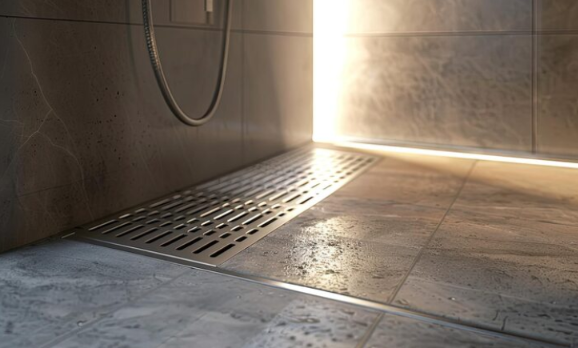
Linear Drains (Trench Drains or Channel Drains)
- Pros: Needs only a single directional slope, making it ideal for large-format tiles and minimalist bathroom designs.
- Considerations: Installation needs more precise planning during the civil work stage, so it is harder to retrofit later.
Tile-In or Invisible Drains
- Pros: The drain cover is tiled over to match the floor, creating a seamless, almost invisible finish.
- Considerations: Cleaning requires lifting the tiled cover, so access needs to be planned carefully from the start.
Wall-Mounted or Edge Drains
- Pros: Frees up floor space and works well in narrow or oddly shaped shower areas.
- Considerations: Wall-mounted units need strong wall backing and precise waterproofing during installation.
Quick Comparison: Which Drain Fits Your Bathroom?
|
Drain Type |
Best Suited For |
Key Advantage |
Things to Keep in Mind |
|
Point Drain |
Standard-sized bathrooms with regular tiles |
Cost-effective and easy to install |
Needs four-way slope, tricky with large tiles |
|
Linear Drain |
Large-format tiles and modern wet rooms |
Only needs a single directional slope |
Requires precise planning before tiling |
|
Tile-In Drain |
Minimalist, seamless bathroom designs |
Nearly invisible, blends with the floor |
Access for cleaning must be planned in advance |
|
Wall-Mounted Drain |
Narrow or irregular shower spaces |
Saves floor space |
Needs strong wall support and waterproofing |
How Do Shower Drains Work?
Understanding the basic mechanism helps you choose the right system for your home.
- Gravity flow: Water flows naturally downward through the sloped floor toward the drain opening.
- Water trap (P-trap): A curved section of pipe holds a small amount of water at all times, which blocks foul sewer gas from rising back up into the bathroom.
- Anti-odor and anti-cockroach valve: Many modern drains add a mechanical dry valve on top of the P-trap, sealing the pipe further to stop odor and pests, even if the water trap dries out.
What Do Shower Drains Consist Of?
A modern shower drain system is made up of several parts working together.
- Drain Cover or Grate: The visible finish piece, available in styles ranging from simple grates to fully tileable covers.
- Hair Strainer or Debris Basket: A removable basket that catches hair and debris before it enters the pipe.
- Drain Body and Flange: The main housing that connects the visible cover to the waste pipe below.
- Anti-Odor Trap or Dry Valve: The mechanism that blocks sewer gas from entering the bathroom.
- Waste Pipe Outlet: The final connection point where wastewater exits into the building's drainage line.
Aspects to Keep in Mind When Buying a Shower Drain
A few practical checks before buying can save you from bigger headaches later.
- Water Flow Rate: Make sure the drain's flow capacity matches your shower system, especially if you're installing a high-flow rain shower.
- Material Quality: For Kerala's coastal humidity, SS 316 marine-grade stainless steel resists corrosion far better than standard SS 304 grade, though SS 304 is fine for less humid inland areas.
- Floor Slope and Tile Sizing: Decide between a four-way slope for point drains or a single directional slope for linear drains, based on your tile size.
- Cleaning and Maintenance Access: Check how easily the drain cover can be removed for regular cleaning, especially for tile-in styles.
- Water Seal vs Mechanical Dry Trap: Confirm whether the drain uses a standard water seal or a mechanical dry valve, since the latter offers better protection against sewer gas even during long dry spells.
Benefits of Upgrading to Modern Shower Drains
Upgrading your drainage system brings more than just a better look.
- Faster water evacuation: Reduces standing water and speeds up drying time after every shower.
- Sleek aesthetic integration: Blends seamlessly with modern tile designs instead of standing out as a bulky fixture.
- Reduced hair clogs: Better strainer design means fewer blockages and less frequent plumbing issues.
- Odor prevention: Anti-odor traps keep sewer gas from entering your bathroom.
- Enhanced safety: Faster drainage reduces standing water on the floor, lowering the risk of slips.
Shop Premium Shower Drains from Kurikkal Ambiente
Choosing the right shower drain depends on your bathroom's layout, tile size, and how much floor space you're working with. Getting this decision right at the planning stage saves you from expensive rework once the tiling is complete.
Visit Kurikkal Ambiente for your Bathroom Sanitarywares in Calicut, or call +91 9447040228 to explore live display setups and get expert guidance on selecting the perfect drainage system for your floor plan.
Frequently Asked Questions
Q. Can I replace a standard point drain with a linear drain without breaking the floor?
Generally, no. Linear drains require a different floor slope pattern than point drains, so switching between the two usually means redoing the floor slab and re-tiling the shower area.
Q. How do I clean hair out of a tile-in invisible drain?
Most tile-in drains have a removable cover or grate that lifts out to reveal the hair strainer basket underneath. Simply pull out the basket, clear the debris, rinse it, and place it back before repositioning the cover.
Q. Why does my bathroom drain smell, and how do anti-odor traps prevent it?
Bad odor usually happens when the water trap inside the drain dries out, allowing sewer gas to rise back up through the pipe. Anti-odor traps use a mechanical dry valve that stays sealed even without standing water, blocking the smell regardless of how often the shower is used.
Q. What grade of stainless steel is best for bathroom floor drains in Kerala?
SS 316 marine-grade stainless steel is the better choice for Kerala's humid, coastal climate, since it resists corrosion far more effectively than standard SS 304. This makes a real difference in long-term durability, especially in areas closer to the coast.