Tiles for Hospitals and Clinics in Kerala: What Grades and Certifications Actually Matter
When you're setting up a hospital, a clinic, or any healthcare space, tiles are not just about how the place looks. They are a practical, safety, and hygiene decision. Choosing the wrong tile in a medical setting can lead to accidents, infection risks, and even compliance problems. That's why understanding the right specifications for tiles for hospitals and clinics in Kerala matters more than most people initially think.
Why Healthcare Spaces Need Different Tiles Than Your Home
A regular home floor tile and a hospital floor tile might look similar at first glance. But they are built for very different demands. Hospitals and clinics in Kerala deal with constant foot traffic, heavy equipment movement, strong chemical cleaning agents, moisture, and hygiene requirements that simply don't apply to residential spaces.
Slip resistance alone is non-negotiable. Wet floors in wards, OTs, and bathrooms cause serious falls. There's also the matter of surface porosity - tiles with higher porosity absorb bacteria and cleaning chemicals, which creates long-term hygiene problems. Then there's load rating. Hospital beds, gurneys, and trolleys are heavy. Tiles that crack under pressure are both a maintenance nightmare and a safety hazard.
So the specification conversation matters. A lot.
Key Grades and Certifications to Look For in Tiles for Hospitals and Clinics in Kerala
Not every tile on the market is built for clinical environments. There are specific grades and standards you need to check before finalising any order. Here is what to look for, and why each one matters in a healthcare context.
Let's talk about slip resistance first, because it is the most critical factor in medical spaces. Tiles used in hospitals should meet at least R9, R10, or R11 slip resistance ratings under international testing standards. R9 is suitable for generally dry zones. R10 works well in patient bathrooms, washrooms, and semi-wet areas. R11 is for wet clinical zones like scrub stations and utility rooms. Don't let anyone sell you a general-purpose tile without confirming this rating in writing.
Next is the PEI (Porcelain Enamel Institute) wear rating. For hospital floors, you want PEI Class IV or V - rated for heavy commercial and institutional use. PEI Class III or below is simply not built for that level of daily wear. If you're running a small clinic and wondering whether PEI IV is overkill - it isn't. You'll thank yourself in three years when the floor still looks the same. And if you're sourcing from a tiles shop in Calicut, ask specifically for the PEI rating on the product sheet before you commit.
Water absorption is another standard to check. The ISO 10545 standard classifies tiles based on how much water they absorb. For hospitals, you want tiles with less than 0.5% water absorption - these are called Group Ia tiles or vitrified tiles. High absorption means the tile soaks in moisture and cleaning chemicals, and over time becomes a source of contamination rather than a clean surface.
Chemical resistance is the certification that gets overlooked most often. Hospital cleaning involves strong disinfectants, bleach-based agents, and sometimes acidic solutions. Tiles must carry a chemical resistance rating - typically classified as Class A or Class B. For OT floors, sterilisation areas, and labs, go with Class A only.
Room-by-Room Tile Specifications for Hospitals and Clinics
Different zones in a hospital or clinic have different requirements. What works in a waiting area doesn't automatically work in an operating theatre. Let's break it down practically.
OT and procedure rooms need tiles that are seamless (large format to reduce grout lines), chemically resistant, non-porous, and anti-static. Anti-static tiles are especially important near equipment sensitive to electrostatic discharge. Look for ESD (electrostatic discharge) compliant tiles in these zones.
Patient wards and corridors require heavy-duty, slip-resistant flooring that is easy to clean and won't show wear quickly. Large format tiles — 60x60 cm or bigger - are ideal here because fewer grout lines means fewer bacteria traps. Light colours are generally preferred to help staff spot contamination quickly.
Washrooms and wet zones are where slip resistance becomes most critical. R11-rated tiles with textured surfaces are the standard recommendation. The grout here also needs to be epoxy-based - regular cement grout absorbs moisture and mould over time, which defeats the purpose of having hygienic tiles.
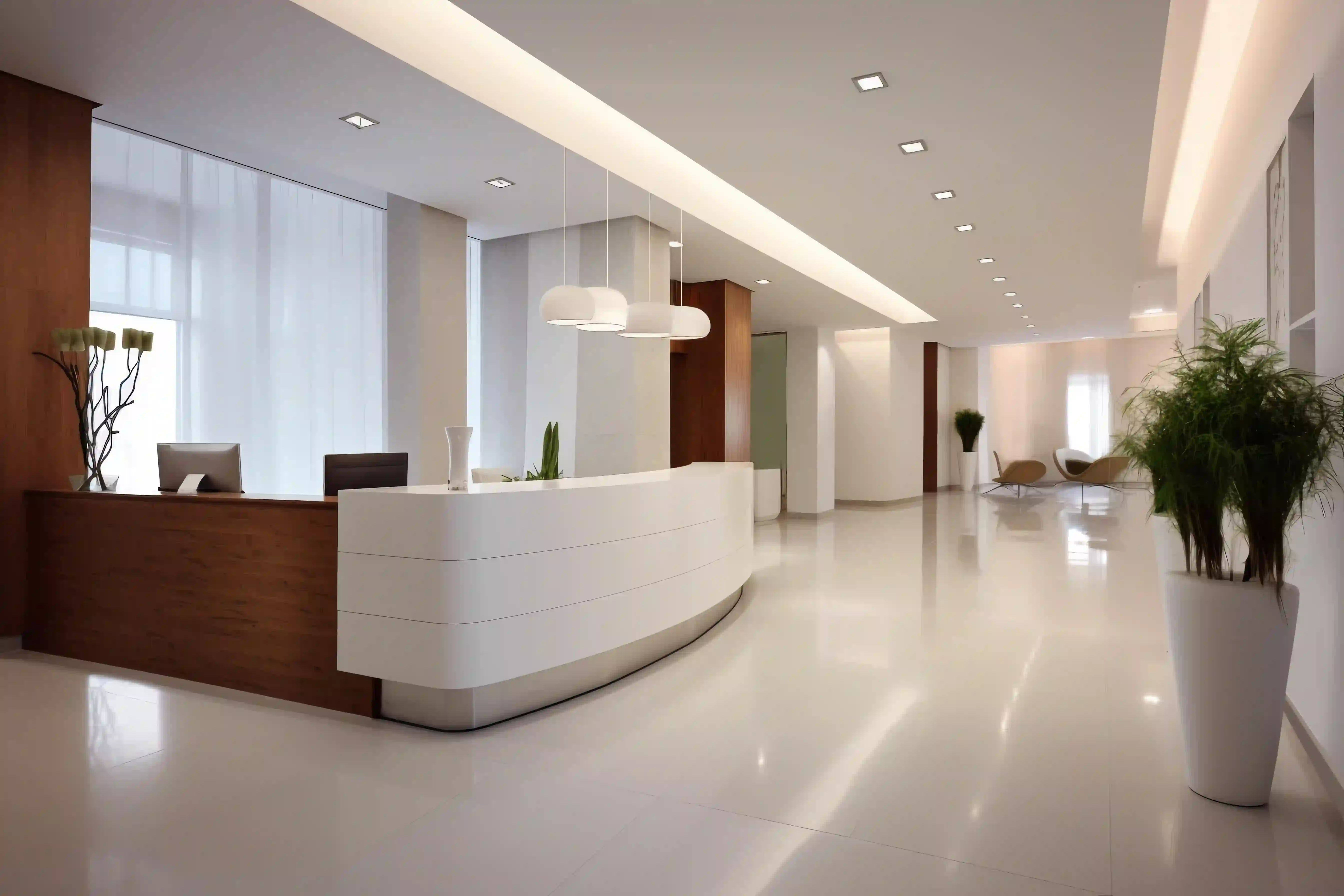
Waiting areas and reception have more design flexibility, but still need commercial-grade durability. A well-designed reception creates trust in a healthcare environment. Polished vitrified tiles in subtle tones work well here - just ensure the slip coefficient is maintained even in polished finishes.
What About BIS Certification and Local Building Codes in Kerala?
In India, the Bureau of Indian Standards (BIS) has its own tile standards under IS 13630 and IS 15622. For hospitals, it's good practice to choose tiles that carry BIS certification - not just international standards. This is especially relevant when projects go through approval from the Kerala Health Department or local bodies, because inspectors may specifically ask for it.
Kerala's climate - high humidity for much of the year - also plays into tile selection. Tiles in coastal or low-lying areas need to perform well under consistent moisture exposure. What works in a hospital in Rajasthan may not hold up the same way in a hospital in Kozhikode or Thrissur. This is why local expertise matters. Kurikkal Ambiente has been supplying healthcare and commercial projects in Kerala for decades, and we factor in the climate, the use case, and the compliance needs together - not separately.
One more thing worth mentioning: thermal comfort. Dark-toned tiles in unventilated areas can make spaces feel significantly warmer, which is uncomfortable for patients. Lighter-toned, thermally neutral tiles help maintain a cooler feel - genuinely important in Kerala's climate, especially in non-AC zones.
Conclusion: Get the Specifications Right Before You Lay a Single Tile
Choosing tiles for hospitals and clinics in Kerala is a technical decision, not just an aesthetic one. Slip resistance ratings, water absorption classification, chemical resistance grades, wear ratings - these are the things that determine whether your tile choice is safe, durable, and compliant over the long term.
The good news is you don't have to figure all of this out alone. At Kurikkal Ambiente, we help healthcare architects, hospital administrators, and clinic owners across Kerala select the right tiles for every zone - with proper specification sheets, sample reviews, and project support. We don't just sell tiles. We help you make the right call.
If you're currently planning a hospital or clinic project in Kerala and want honest, practical advice on which tiles will actually hold up - come talk to us.
Ready to source the right tiles for your healthcare project?
Contact Kurikkal Ambiente Today →
Visit our showroom or reach out online. We're here to help you get it right.