Seamless Indoor-Outdoor Living: Extending Living Room Tiles into the Veranda
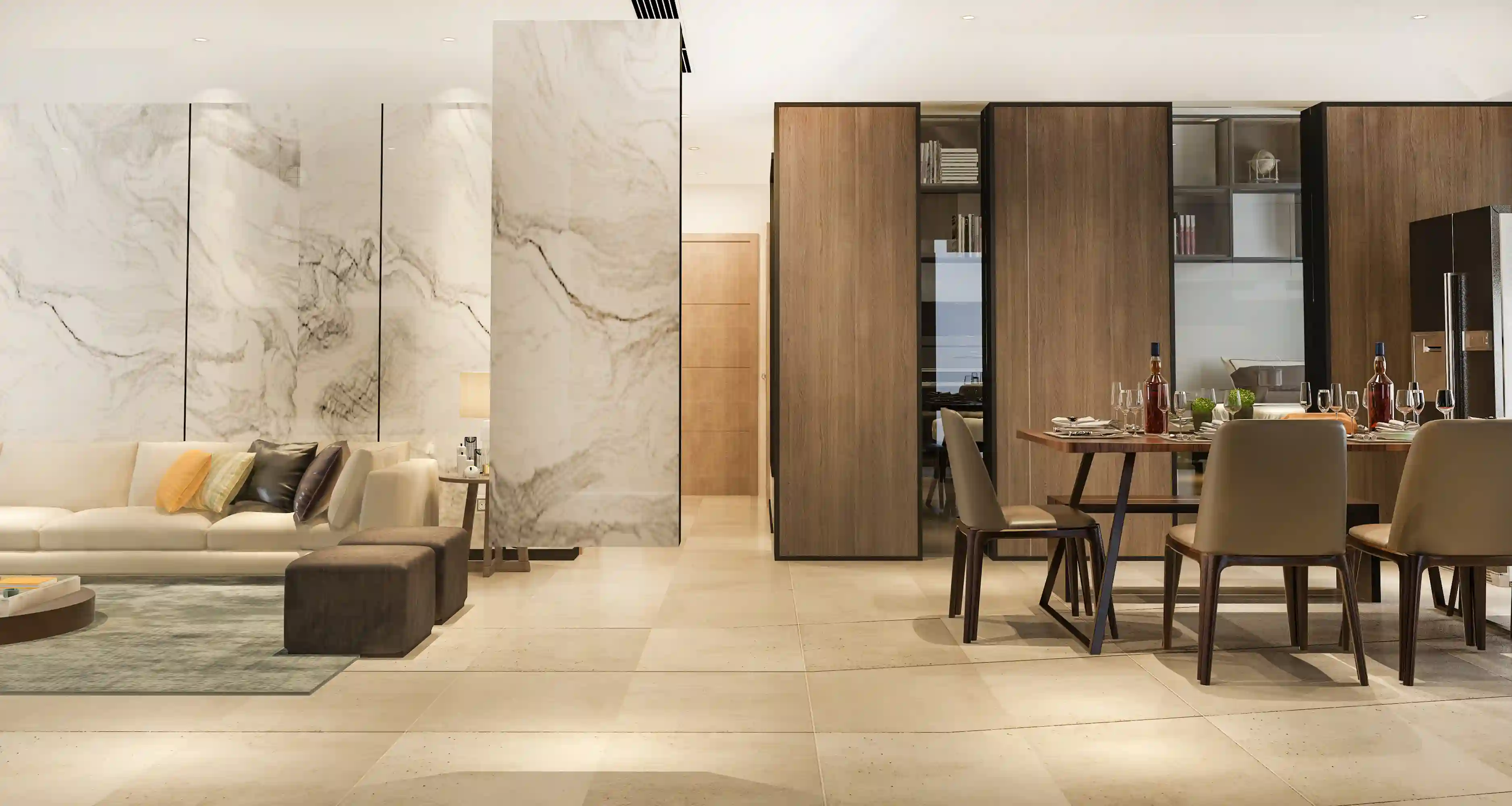
There's a certain kind of home that just feels bigger than it is. The living room flows into the veranda without any interruption - same floor, same feel, same light. It's a design choice that's been quietly gaining ground in Kerala homes, and for good reason. Extending living room tiles into the veranda is one of the simplest ways to make your space look and feel more open. No heavy renovation, no structural work. Just the right tile choice and a bit of planning. At Kurikkal Ambiente, we've helped hundreds of homeowners in Calicut pull this off - and this guide covers everything you need to know to do it right.
Table of Contents
1. Why the Indoor-Outdoor Look Works So Well in Kerala
2. Choosing the Right Tile for Both Spaces
3. Which Tiles Actually Work for Extending Living Room Tiles into the Veranda
4. Layout Tips for a Truly Seamless Look
5. Getting the Installation Right
6. Dos and Don'ts - a Quick Reference
7. FAQs
8. Final Thoughts
Why the Indoor-Outdoor Look Works So Well in Kerala
Kerala homes have always had a strong relationship with outdoor spaces. The traditional nalukettu had its central courtyard. Older homes had wide verandas that served as a social and functional space. That connection between inside and outside isn't new - the materials just are.
Verandas in Kerala serve multiple purposes:
• A shaded outdoor sitting area for morning tea or evening conversations
• A buffer zone that keeps direct sunlight from entering the living room
• A display space for plants and traditional accents
• An extension of the living area when you have guests
When the flooring flows continuously from inside to outside, the veranda stops being just an 'outdoor area' and becomes a true extension of your living space. Visually and practically.
Choosing the Right Tile for Both Spaces
This is where most people go wrong. They pick a tile they love for the living room and then assume the same tile will work on the veranda. Sometimes it will. Often it won't. The veranda faces conditions the living room never has to deal with - rain, direct sun, humidity, and foot traffic that's often dirtier.
The tile you choose needs to satisfy all of these at once:
• Slip resistance: Critical for the veranda, especially in monsoon. Look for tiles rated R10 or R11.
• Weather resistance: The tile should not absorb water or fade in direct sunlight.
• Thermal stability: Kerala summers are intense. The tile should not crack under heat expansion.
• Matching aesthetics: For the seamless look, both spaces should ideally use the same tile - or at minimum the same colour tone.
• Finish: Polished inside is fine. But on the veranda, always go matt or textured.
You can use one tile in both spaces - many homeowners do. The trick is choosing a tile that performs well outdoors, and then making it work beautifully indoors. That's actually easier than it sounds, because the best outdoor tiles today look nothing like the rough, plain ones from 20 years ago.
Which Tiles Actually Work for Extending Living Room Tiles into the Veranda
Here's how the most common options compare:
|
Tile Type |
Slip Resistance |
Heat Tolerance |
Weather Proof |
Indoor-Outdoor Fit |
|
Porcelain |
★★★★★ |
★★★★★ |
★★★★★ |
✅ Ideal |
|
Granite |
★★★★☆ |
★★★★★ |
★★★★☆ |
✅ Great |
|
Ceramic |
★★★☆☆ |
★★★☆☆ |
★★★☆☆ |
⚠️ Indoor-only |
|
Vitrified (Matt) |
★★★★☆ |
★★★★☆ |
★★★★☆ |
✅ Good |
|
Natural Stone |
★★★☆☆ |
★★★★★ |
★★★☆☆ |
✅ With sealing |
|
Wood-look Porcelain |
★★★★★ |
★★★★☆ |
★★★★★ |
✅ Ideal |
Porcelain tiles are the top pick for this application - full stop. They're dense, barely absorb water, handle heat well, and come in finishes that look stunning in a living room while being safe enough for an outdoor space.
Matt vitrified tiles are a close second - widely available, cost-effective, and they bridge the indoor-outdoor gap really well.
Ceramic tiles are best kept indoors. They're more porous and don't hold up well to prolonged weather exposure.
Layout Tips for a Truly Seamless Look
The tile itself is only half the job. The layout - how the tiles are placed and aligned - is what actually creates the seamless effect. Get this wrong, and even the most expensive tile won't look continuous.
Keep these in mind:
• Continuous tile direction: Run the tiles in the same direction from the living room into the veranda. If your indoor tiles run parallel to the length of the room, continue that same direction outside.
• Match the grout: Use the same grout colour in both spaces. This single detail has a huge visual impact. Even a slight difference in grout tone breaks the continuity.
• Same tile size: Switching from 800x800mm inside to 600x600mm outside immediately signals a boundary. Stick with one size throughout.
• Threshold management: If there's a small step or level difference at the door, use a matching threshold strip in a neutral metal finish - not a contrasting one.
• Extend the pattern, don't restart it: If your indoor tiles have a subtle pattern, try to continue it outside rather than starting fresh. Even a rough continuation reads better than an obvious join.
One thing worth noting - the door frame can become a natural visual anchor. When tiles flow through a door, the frame becomes part of the design, not a dividing line. Many Kerala homes use this to great effect.
Getting the Installation Right
Even the right tile, laid in the wrong way, won't give you the result you want. A few installation details matter a lot when you're tiling across two different environments.
• Slope on the veranda: The veranda floor needs a slight slope (1–2%) away from the living room for drainage. This is non-negotiable in Kerala's climate. Your tiler should account for this in the screed layer before laying tiles.
• Waterproofing the joint: The transition point at the door needs a flexible sealant - not just grout - to handle the slight movement between indoor and outdoor slabs. Rigid grout at this joint cracks over time.
• Use the right adhesive: Outdoor tiles need a waterproof adhesive. Standard indoor tile adhesive won't hold when it faces rain and temperature changes.
• Seal the veranda tiles: Even if you're using porcelain, sealing the veranda tiles after installation adds a layer of protection against staining and moisture over time.
For reference on tile installation standards, the Tile Council of North America (TCNA) publishes widely used installation guidelines that professional tilers often follow — useful if you want to verify your contractor's approach.
What Works Best in Calicut Homes Specifically
Calicut (Kozhikode) has its own micro-climate to consider. The monsoon here is heavy, humidity stays high through most of the year, and many homes face west - which means verandas get intense afternoon sun.
A few things that matter specifically here:
• Anti-algae tiles are worth considering - algae growth on veranda floors is very common in humid climates like Calicut's
• Lighter tile colours work better on west-facing verandas - they reflect heat instead of absorbing it
• Opt for larger tile formats (600x600 or 800x800) to reduce grout lines - fewer grout lines mean less moisture entry and easier cleaning
If you're specifically looking for floor tiles in Calicut that work for this indoor-outdoor application, Kurikkal Ambiente's showroom carries a curated range of porcelain and matt vitrified tiles suited exactly for this - including options that are slip-resistant, weather-ready, and visually consistent across both spaces.
Dos and Don'ts - a Quick Reference
|
✅ Do This |
❌ Avoid This |
|
Use the same tile size indoors and outdoors |
Switching tile size breaks visual continuity |
|
Choose a matt or textured finish for the veranda |
Polished tiles outdoors become a slip hazard when wet |
|
Match grout colour to the tile tone |
Using contrasting grout makes the join look obvious |
|
Seal the veranda tiles after installation |
Skipping sealant leads to moisture damage quickly |
|
Keep consistent tile direction/layout pattern |
Changing pattern direction kills the seamless effect |
FAQs
1. Can I use the same tile indoors and outdoors in Kerala?
Yes - but only if the tile is rated for outdoor use. Porcelain and matt vitrified tiles work well in both spaces. Ceramic and polished tiles are generally not suited for outdoor areas, especially in Kerala's wet climate.
2. Will extending tiles into the veranda make the living room look bigger?
It absolutely does. Extending living room tiles into the veranda removes the visual boundary between the two spaces. The continuous floor line draws the eye outward, making both the living room and veranda feel more spacious than they actually are.
3. What tile finish should I use for the veranda?
Always matt or textured for the veranda. Polished tiles look beautiful but become dangerously slippery when wet. A matt version of the same tile you use indoors gives you the continuity without the safety risk.
4. How do I handle the step between the living room and veranda?
If there's a height difference, use a matching tile on the step riser as well. Choose a threshold strip in a neutral tone that blends with the tile rather than contrasting it. The goal is to minimise visible transitions.
5. Is grout colour really that important?
Yes - more than people expect. Grout can make up 10–15% of your visible floor surface. Even a slightly different shade between indoor and outdoor grout immediately signals a visual break. Match it exactly if you want the seamless look.
Final Thoughts - Start at the Door, End with a Seamless Home
The boundary between your living room and veranda doesn't have to be a hard line. With the right tile, a consistent layout, and a few careful installation details, the two spaces can feel like one. It's a design choice that adds real value - to how the space looks, how it functions, and how it feels to live in.
To recap:
• Tile choice: Porcelain or matt vitrified - suited for both spaces
• Finish: Polished inside, matt outside
• Layout: Same size, same direction, same grout
• Installation: Slope for drainage, flexible sealant at the joint, seal after laying
If you're planning this for your home and want to see the tile options in person, visit Kurikkal Ambiente in Calicut. We'll help you find tiles that work beautifully in both your living room and veranda - without compromise. Browse our collection at kurikkal.com or come see us at our showroom.