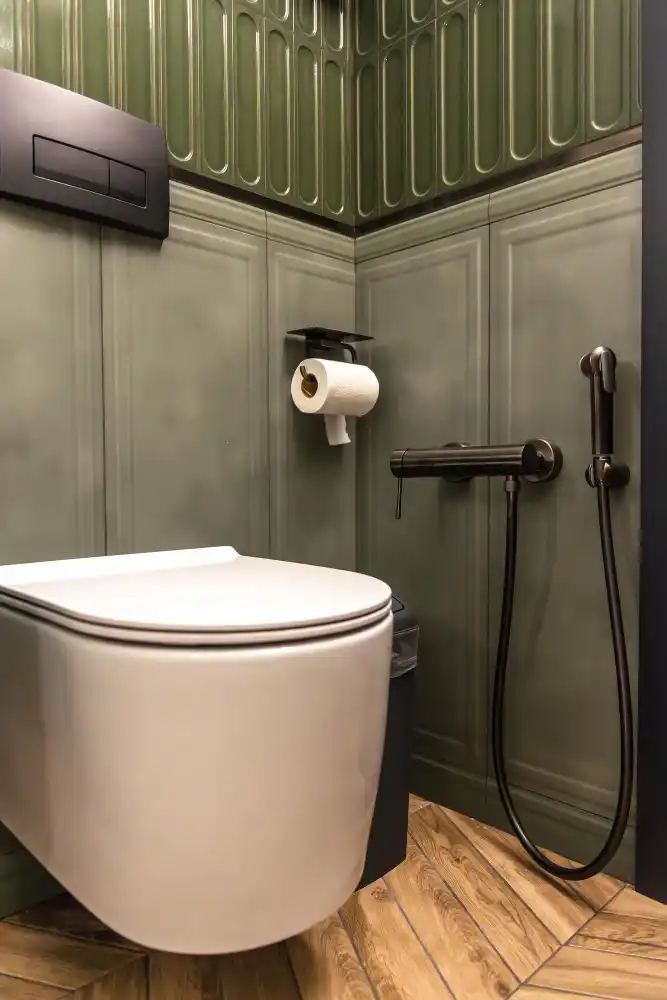
Wall Mounted Western Toilet: How It Works, What It Needs and Whether It Suits Your Home
A wall mounted western toilet is a toilet pan fixed to the wall and held clear of the floor, with the cistern hidden inside the wall. It has moved from hotels and airports into Kerala homes because it looks clean, frees up floor space and is easier to mop around. It also raises fair questions. How does it flush? What does the wall need to carry? Is it worth the extra planning in a Kerala home?
This guide answers those questions in plain language, so you can decide whether a wall hung toilet suits your new bathroom or renovation. It is written by the team at Kurikkal Ambiente, a sanitary ware showroom in Calicut (Kozhikode) that helps homeowners, architects and interior designers choose bathroom fittings.
In this guide
- What Is a Wall Mounted Western Toilet?
- How Does a Wall Mounted Western Toilet Work?
- What Components Are Required to Install a Wall Mounted Toilet?
- Does a Wall Mounted Toilet Need a Special Wall?
- Is a Wall Mounted Toilet Better Than a Floor Mounted One?
- How Much Does a Wall Mounted Western Toilet Cost?
- What Designs, Colours and Finishes Are Available?
- How Do You Maintain and Repair a Wall Mounted Toilet?
- Where Can You Buy a Wall Mounted Toilet in Calicut?
- Frequently Asked Questions
What Is a Wall Mounted Western Toilet?
A wall mounted western toilet, also called a wall hung toilet or wall mounted commode, is a toilet whose bowl is bolted to a supporting frame inside the wall, so it hangs without touching the floor. "Wall mounted" and "wall hung" mean the same thing in the sanitaryware trade.
The difference from a floor mounted western toilet is where everything sits. In a floor mounted model, the bowl rests on the floor and the cistern sits on the back of the bowl or on the wall behind it. In a wall mounted model, only the bowl and the flush plate are visible. The cistern, frame and pipework are concealed behind the wall or a half-height panel.
Contemporary bathrooms use this design for three reasons:
-
Cleaner lines. With no pedestal or exposed cistern, the toilet looks lighter and suits a modern western toilet layout.
- Easier cleaning. You can mop straight under the bowl, with no base joint where dirt collects.
- Flexible seat height. The installer can set the bowl height to suit the household, for example for children or older family members.
How Does a Wall Mounted Western Toilet Work?
A wall mounted toilet works like any other flush toilet. The difference is that the flushing system is built into the wall instead of sitting on the bowl. Four parts do the work:
- Installation frame. A steel frame fixed to the structural wall or the floor carries the weight of the pan and the user.
- Concealed cistern. A slim water tank is fitted inside the frame, behind the finished wall. This is the wall mounted toilet with concealed cistern that people usually mean.
- Flush plate. A push plate on the wall, usually dual flush, operates the cistern.
- Waste outlet and water supply. The pan connects to the drain through the frame, and the cistern fills from the water supply line.
The flushing process, step by step:
- You press the flush plate. The button works the release valve inside the concealed cistern.
- The valve opens and the stored water rushes down the flush pipe into the bowl.
- Water washes around the rim and pushes waste through the trap at the back of the pan.
- The waste enters the drainage pipe behind the wall and goes into the soil line.
- The cistern refills through the supply connection. A float valve shuts the water off once the tank is full.
Most concealed cisterns offer two flush volumes, a smaller one for liquid waste and a larger one for solid waste. This helps cut water use in a household.
What Components Are Required to Install a Wall Mounted Toilet?
A wall mounted toilet is a system, not a single product. You need seven items, and they must be compatible with each other.
|
Component |
Purpose |
Important consideration |
|
Wall-hung toilet pan |
The visible bowl and seat |
Check the projection and the bolt spacing against the frame. |
|
Concealed cistern |
Stores and releases flush water |
Choose a model with an access route for servicing. |
|
Heavy-duty installation frame |
Carries the pan and user weight |
Look for a stated load rating and a frame that suits your wall type. |
|
Flush plate |
Operates the flush from the wall |
It must fit the cistern's actuator and the wall cut-out. |
|
Drainage pipe |
Carries waste to the soil line |
The outlet position and slope must suit the frame and your plumbing layout. |
|
Water supply connection |
Fills the cistern |
Fit an isolation valve that stays reachable. |
|
Fixing brackets and accessories |
Anchor the frame and secure the pan |
Use the set supplied for that frame and pan, and do not substitute loose fittings. |
Compatibility matters because the pan, frame and cistern are cut to fit one another. A pan with the wrong bolt spacing, or a flush plate that does not match the cistern, can mean rework after the tiles are already laid. The safest approach is to select the pan, frame, cistern and flush plate together, ideally from the same range, and give your plumber the technical drawings before tiling begins.
Does a Wall Mounted Toilet Need a Special Wall?
No special wall is needed, but the toilet must never hang from the wall surface alone. The weight is carried by the concealed installation frame, and the frame must be anchored to something solid.
There are two common set-ups:
- Solid masonry wall. The frame is fixed to the wall and the floor. Because the wall is thick and strong, the frame can often be built into a recess or behind a cladding. Many Kerala homes with brick or block walls fall into this group.
- Lightweight partition or dry wall. A free-standing frame, fixed to the floor and braced to the structure, stands in front of or inside the partition. The partition does not carry the load.
The frame depth also matters. A concealed cistern needs a cavity behind the finished wall, so plan for a thicker wall or a boxed-out panel behind the toilet. Check the frame manufacturer's depth requirement before the wall is built, and mark the drain and water supply points early.
Fixing the pan directly to a thin wall, plaster or tile with ordinary anchors is not appropriate. The wall cannot take the leverage of a seated adult, and the bolts will loosen over time. Wall hung frames are tested and rated for heavy loads (check the rating on the product you buy), and the rating only holds when the frame is installed as the manufacturer specifies. Use a plumber who has installed concealed cisterns before.
Is a Wall Mounted Toilet Better Than a Floor Mounted One?
It is better for some homes and not for others. A wall mounted toilet wins on looks, cleaning and flexibility. A floor mounted toilet wins on simplicity, repair access and upfront cost.
|
Factor |
Wall mounted toilet |
Floor mounted toilet |
|
Appearance |
Clean, minimal, cistern hidden |
Visible pedestal and cistern |
|
Floor cleaning |
Easy, since the floor is clear underneath |
Harder around the base |
|
Installation |
Needs a frame and a wall cavity |
Simple, fixed to the floor |
|
Seat height |
Adjustable at installation |
Fixed by the product |
|
Servicing the cistern |
Through the flush plate opening |
Direct access |
|
Upfront cost |
Usually higher |
Usually lower |
It suits you if you are building or renovating the bathroom, want a modern bathroom design, have a small bathroom where visible floor area matters, or care about easy cleaning.
Think twice if you are replacing a toilet in a finished bathroom without wanting to open the wall, or if the wall behind the toilet is too thin to hide the frame. In that case a floor mounted model, or a back-to-wall toilet with a concealed cistern, may be easier.
For a new bathroom, the decision is best made at the planning stage, before the plumbing and tiling are fixed.
How Much Does a Wall Mounted Western Toilet Cost?
The wall mounted western toilet price depends on the full system, not only the pan. Prices change by brand and over time, so confirm the current rate with the showroom rather than relying on a figure in a blog.
These factors drive the cost:
- Brand and range. Premium sanitary ware brands cost more than entry-level ranges.
- The frame and cistern. A good installation frame with a reliable concealed cistern is a large part of the budget. It is the part you cannot easily replace later, so do not cut corners here.
- Pan features. Rimless design, soft-close seats and special glazes add to the price.
- Flush plate. Plates range from basic plastic to metal and glass finishes.
- Labour and wall work. Building the cavity or cladding, and the plumber's time, add to the total.
A useful comparison is the price of the whole set (pan, frame, cistern, flush plate and seat) against a floor mounted toilet with its own cistern. Ask for a single quotation covering all parts so the comparison is fair.
What Designs, Colours and Finishes Are Available?
Western toilet designs in the wall hung category vary in shape, rim style and finish:
- Rim style. Rimless bowls have no hidden underside, which makes them easy to wipe clean. Conventional rim bowls are more common and cost less.
- Shape. Round or compact bowls suit small bathrooms, and elongated bowls give more seating comfort.
- Flush plates. Plates come in different shapes and finishes, so you can match the tapware and other bath fixtures.
- Western toilet colours. White remains the most popular and the easiest to match with other sanitary ware. Some ranges also offer matte black, grey, beige and ivory. If you choose a colour, check that the basin and other fittings are available in the same shade.
When planning a modern bathroom design, choose the toilet together with the bathroom wall tiles, basin and tapware. A coordinated set looks better than items bought piece by piece.
How Do You Maintain and Repair a Wall Mounted Toilet?
Daily care is the same as for any toilet: clean the bowl with a mild toilet cleaner and wipe the seat and the flush plate. Avoid harsh abrasives on the glaze and on metal or glass flush plates.
The real difference is access. Because the cistern is hidden, servicing goes through the flush plate opening, and a well-installed frame is designed for this. Typical jobs include:
- Constant running water. Usually a worn inlet or flush valve, which the plumber can replace through the access opening.
- Weak flush. Often caused by a low water level, a blocked rim or a partly closed isolation valve.
- Leaks. Check the pan connector and the supply joints. Early detection matters, because a leak behind the wall can go unnoticed.
Two habits prevent most trouble. Keep the supply isolation valve reachable, and keep the model name and spare-parts details of the cistern. Ask the showroom whether spare cisterns, flush valves and plates are stocked for the range you choose. That is worth confirming before you buy, not after the wall is closed.
Where Can You Buy a Wall Mounted Toilet in Calicut?
If you are looking for sanitary ware in Calicut, it helps to see the pan, frame and flush plate together before you decide. A good sanitary ware shop in Calicut can show you how the parts fit, explain the wall depth the frame needs, and quote the whole set.
Kurikkal Ambiente is a sanitary ware showroom in Calicut offering bathroom sanitary ware in Calicut for new builds and renovations. You can browse at kurikkal.com and then visit, which is a practical way to start if you are searching for sanitary ware online Calicut and want to compare options before travelling. The showroom also covers toilet sanitary ware Calicut homeowners ask about, as well as bathroom fittings in Calicut such as basins, tapware, bath fixtures and bathroom closets.
When comparing the best toilet sanitary ware Calicut has to offer, check these points:
- Is the full system quoted together (pan, frame, cistern, plate)?
- Is the frame's load rating stated?
- Are spare parts and servicing available locally?
- Will the pan, basin and other fittings match in colour and finish?
Architects and designers in Kozhikode planning a project can bring their drawings so the frame depth and drain positions are settled early. The same applies if you want sanitary ware in Kozhikode for a full bathroom renovation, or bathroom sanitary products in Kerala for a home outside the city. A sanitaryware showroom in Kozhikode is most useful before the tiling starts, while changes are still cheap.
Frequently Asked Questions
What is the difference between a wall mounted and a wall hung toilet?
There is no difference. Both terms describe a toilet bowl fixed to a frame in the wall, clear of the floor.
Can a wall mounted toilet hold an adult's weight?
Yes, when it is installed on a proper frame as the manufacturer specifies. The frame, not the wall surface, carries the load. Check the rating of the product you choose.
Can I fit a wall mounted toilet in an existing bathroom?
Yes, but you will usually need to open the wall or build a panel to hide the frame and cistern, and move the drain and water points if needed.
Where is the cistern in a wall mounted toilet?
Inside the wall frame, behind the flush plate. Only the plate is visible.
Is a wall mounted toilet hard to repair?
Not if it is installed well. Most flush faults are fixed through the flush plate opening. A hidden leak is the main risk, which is why a good plumber matters.
Is a wall mounted toilet more expensive than a floor mounted one?
Usually yes, because you pay for the frame, the concealed cistern and the wall work. Compare the cost of the whole set.
Conclusion
A wall mounted western toilet gives you a cleaner look, easier floor cleaning and a flexible seat height, in return for planning the wall, the frame and the plumbing early. If you are building or renovating, it is worth considering. If you are only replacing a toilet in a finished bathroom, a floor mounted model may be simpler. Before you decide, visit a sanitary ware showroom, see the frame and cistern in person, and ask for one quotation covering every part.