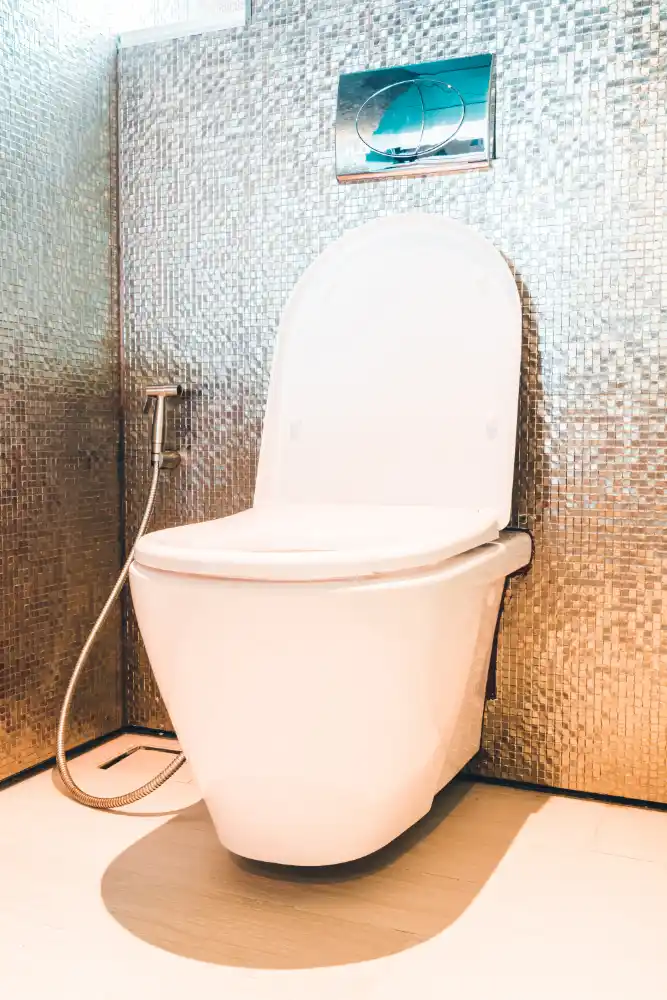
Bathroom Closet Types Explained: S-Trap vs P-Trap, One-Piece vs Two-Piece
The main bathroom closet types are described in three separate ways: by drainage outlet (S-trap or P-trap), by construction (one-piece or two-piece), and by mounting (floor-mounted or wall-mounted). An S-trap toilet drains down through the floor. A P-trap toilet drains horizontally into the wall. One-piece and two-piece describe whether the bowl and cistern are a single unit or separate parts.
Choosing a western toilet is not only about looks. The drainage outlet, plumbing position, bathroom size, installation and upkeep decide whether a toilet will work in your bathroom. This guide explains S-trap vs P-trap and one-piece vs two-piece toilet designs in plain language, so you can check compatibility before you buy.
Table of Contents
- What Are the Different Types of Bathroom Closets?
- What Is an S-Trap Toilet and How Does It Work?
- What Is a P-Trap Toilet and How Does It Work?
- What Is the Difference Between an S-Trap and a P-Trap Toilet?
- What Is a One-Piece Western Toilet?
- What Is a Two-Piece Western Toilet?
- What Is the Difference Between One-Piece and Two-Piece Toilets?
- Are Wall-Mounted and Floor-Mounted Toilets Different from S-Trap and P-Trap Toilets?
- How Do You Choose the Right Bathroom Closet for Your Home?
- What Are the Common Mistakes to Avoid When Buying a Western Toilet?
- Where Can You Find Quality Bathroom Closets and Sanitary Ware in Calicut?
- Frequently Asked Questions About Bathroom Closet Types
- Conclusion
What Are the Different Types of Bathroom Closets?
Bathroom closets (also called water closets or WCs) are classified in three ways. Each describes a different feature of the same toilet.
- Drainage outlet: S-trap (floor outlet) and P-trap (wall outlet).
- Construction: one-piece (bowl and cistern joined) and two-piece (separate bowl and cistern).
- Mounting style: floor-mounted and wall-mounted.
These categories overlap. A toilet can be two-piece and P-trap, or one-piece and S-trap. Wall-mounted toilets are a separate installation style and connect to the drain through a wall frame.
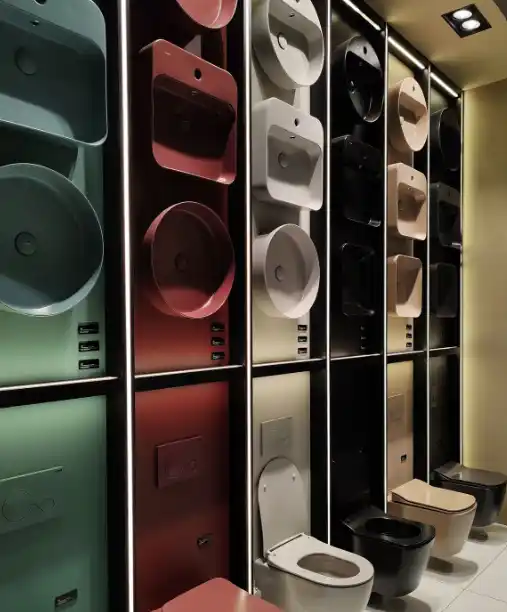
Browse the range of western toilet designs to see how these styles appear in a showroom catalogue.
What Is an S-Trap Toilet and How Does It Work?
An S-trap toilet has its waste outlet pointing downward. The outlet fits over a drain pipe that comes up through the floor. Waste water leaves the bowl, passes through the trap (which holds a water seal against sewer odour) and drops straight into the floor drain.
Drainage path: bowl → trap → floor outlet → soil pipe.
This works when the soil pipe is planned to come up through the bathroom floor at a suitable distance from the wall. Before buying, check where the existing floor outlet sits.
Outlet measurements and rough-in requirements differ by product, so there is no single S-trap size. As one example, a Jaquar data sheet for a coupled S-trap model lists a vertical outlet and a horizontal distance from the wall line to the outlet centre of up to 300 mm (see this S-trap toilet specification sheet). Another brand or model may differ.
What Is a P-Trap Toilet and How Does It Work?
A P-trap toilet has a horizontal waste outlet that goes into the wall behind the toilet. Waste water leaves the bowl, passes through the trap and moves sideways into a drain pipe that comes out of the wall.
Drainage path: bowl → trap → wall outlet → horizontal drain line.
This suits bathrooms where the plumbing was planned with the soil pipe in or near the wall. For P-trap models, the key measurement is usually the height of the outlet centre above the floor.
One Jaquar data sheet for a coupled P-trap toilet lists a horizontal outlet with a floor-to-outlet-centre distance of up to 180 mm (see this P-trap toilet specification sheet). Again, this is one model. Always compare your wall outlet against the manufacturer's product drawing before ordering.
What Is the Difference Between an S-Trap and a P-Trap Toilet?
The difference is the direction of the waste outlet. An S-trap toilet drains through the floor, and a P-trap toilet drains through the wall. This is the core of the S-trap vs P-trap comparison.
|
Feature |
S-Trap Toilet |
P-Trap Toilet |
|
Waste outlet |
Through the floor |
Through the wall |
|
Drainage direction |
Downward connection |
Horizontal connection |
|
Plumbing arrangement |
Floor drainage |
Wall drainage |
|
Installation requirement |
Compatible floor outlet |
Compatible wall outlet |
|
Replacement considerations |
Existing floor outlet position |
Existing wall outlet position |
|
Suitable application |
Bathrooms with compatible floor drainage |
Bathrooms with compatible wall drainage |
These terms are also recognised in Indian standards. The BIS specification for water closets, IS 2556 (Part 8), describes washdown and siphonic patterns with S or P outlets.
Which one is suitable for an existing bathroom?
The one that matches the drain you already have. Look at where the pipe meets the old toilet. If it goes into the floor, you need an S-trap. If it goes into the wall, you need a P-trap.
Can an S-trap be replaced with a P-trap, or the other way round?
Not by simply swapping the toilet. The outlet position is fixed in the floor or wall, so the new toilet must match it. Changing from one to the other usually means altering the drain connection, which needs a qualified plumber and may involve breaking tiles and redoing waterproofing. Do not assume a conversion is possible without checking the drainage arrangement first.
Why does drainage position matter?
A toilet that does not line up with the drain will leak, sit badly or cannot be fixed at all. Choose the toilet to suit the drain, not the other way round, and confirm against the manufacturer's installation drawing.
What Is a One-Piece Western Toilet?
A one-piece western toilet has the bowl and cistern built together as one integrated unit.
Advantages
- Integrated construction with fewer visible joints between bowl and cistern.
- A streamlined look that suits many modern interiors.
- Easier wiping of the outer surface, since there is no separate joint to clean around.
Considerations
- Heavier to carry and install as a single unit, so plan handling and transport.
- Check the overall dimensions against the available space.
- If a part fails, repair and replacement depend on the model's design and access.
- Price varies by brand and model.
For more on closet styles, see Kurikkal's closet sanitary fittings guide.
What Is a Two-Piece Western Toilet?
A two-piece western toilet has a separate bowl and cistern. The cistern is fixed onto the bowl using bolts and a sealing arrangement. This is often called a coupled or close-coupled toilet.
Advantages
- Bowl and cistern can be handled and carried separately.
- Many models and designs are available.
- Parts can be replaced individually where the model allows it.
Limitations
- The joint between bowl and cistern is visible.
- There are additional joints, and the connection area needs attention while cleaning.
- The connection must be sealed and installed correctly.
Do not assume two-piece toilets are always cheaper or less durable. Price and quality depend on the brand and model.
What Is the Difference Between One-Piece and Two-Piece Toilets?
A one-piece toilet has the bowl and cistern integrated. A two-piece toilet has them as separate parts assembled during installation. This is the core of the one-piece vs two-piece toilet choice, and it has nothing to do with S-trap or P-trap.
|
Feature |
One-Piece Toilet |
Two-Piece Toilet |
|
Construction |
Bowl and cistern integrated |
Bowl and cistern separate |
|
Appearance |
Integrated design |
Separate cistern and bowl |
|
Installation |
Single integrated unit |
Separate components assembled |
|
Cleaning |
Fewer external connection joints |
Cleaning around the bowl-cistern joint may need attention |
|
Handling |
Usually heavier as one unit |
Components can be handled separately |
|
Maintenance |
Depends on product design and access |
Individual components may be replaceable |
|
Price |
Varies by brand and model |
Varies by brand and model |
|
Bathroom suitability |
Depends on dimensions and plumbing |
Depends on dimensions and plumbing |
A household that wants an integrated look and fewer joints may lean towards one-piece. A household that values easier handling and the option to replace individual parts may lean towards two-piece.
Neither is automatically better, so check the specific model.
Are Wall-Mounted and Floor-Mounted Toilets Different from S-Trap and P-Trap Toilets?
Yes. Mounting style and trap type are different classifications and should not be mixed up.
- Floor-mounted toilets sit on the floor and are fixed with floor screws. Depending on the model, they can be S-trap or P-trap.
- Wall-mounted toilets are fixed to a frame and hang above the floor. The waste connects through the wall frame, and the cistern is normally a concealed cistern inside the wall or frame. You can see this category of wall mounted toilets on the Kurikkal website.
Wall-mounted installations also need space for the frame, access to plumbing and a wall that can take the load. Follow the toilet and frame manufacturer's instructions, and ask a qualified plumber to confirm outlet compatibility.
Remember: whether a toilet is floor-mounted or wall-mounted does not tell you whether it is S-trap or P-trap.
How Do You Choose the Right Bathroom Closet for Your Home?
Start with the drain, then the space, then the style. Use this checklist.
- Check the drainage outlet. Identify whether the plumbing is a floor outlet or a wall outlet. Measure the outlet position and verify it against the product's data sheet.
- Check bathroom dimensions. Note the available floor space, clearance around the toilet, door opening and distance from nearby fixtures.
- Choose the construction type. Decide between one-piece and two-piece based on installation, cleaning and maintenance preferences.
- Check flushing requirements. Look at the flushing system, cistern compatibility, water supply and whether replacement parts are available.
- Check product specifications. Confirm overall dimensions, trap configuration, outlet measurements, installation instructions and warranty.
- Consider long-term maintenance. Think about ease of cleaning, access to plumbing connections and availability of compatible components.
For a new house in Kerala, decide the toilet model before the plumber fixes the soil pipe and before waterproofing and tiling. This avoids moving the outlet later. For an old bathroom, the existing drain decides your options.
Kerala's humid climate also makes good waterproofing and proper sealing important. Read Kurikkal's guide to bathroom renovation in Kerala and the wider sanitaryware buying guide before finalising.
Always keep the manufacturer's installation drawing, and ask a qualified plumber to carry out installation and any plumbing changes.
What Are the Common Mistakes to Avoid When Buying a Western Toilet?
- Buying a toilet without checking the trap type.
- Confusing S-trap and P-trap, or mixing trap type with mounting style.
- Ignoring the existing drainage outlet position.
- Not checking the manufacturer's installation drawing.
- Choosing without measuring the bathroom.
- Choosing only by appearance.
- Ignoring flushing and cistern compatibility.
- Not considering maintenance and spare parts.
- Making plumbing changes without professional guidance.
Where Can You Find Quality Bathroom Closets and Sanitary Ware in Calicut?
Kurikkal Ambiente is a sanitary ware shop in Calicut with a showroom at Saubhagya Shopping Complex, Mavoor Road. According to its website, Kurikkal began in 1981 and today offers tiles, bathroom, kitchen and wellness products. For anyone looking for a sanitary ware showroom in Calicut or a bathroom closet shop in Calicut, it is a relevant place to start.
The bathroom sanitary ware in Calicut section groups faucets, accessories and sanitary fittings. The sanitary fittings page lists toilet categories including washdown, rimless, floor standing, wall mounted, compact, washout, smart and shower toilets.
Washdown, washout and rimless describe how the bowl flushes. They are separate from S-trap and P-trap, so the trap type still needs to be checked for each model.
The site also lists brands including Kohler, TOTO, VitrA, Villeroy & Boch, Duravit, CERA and American Standard. You can see the full list of sanitaryware brands. Product availability varies, so confirm the specific model, its trap configuration and its dimensions with the team.
If you prefer to start online, the E-Catalogue and the website's enquiry form are useful for people searching for sanitary ware online in Calicut. You can also plan matching bathroom accessories at the same stage.
Take with you to the showroom: your drain position, bathroom size and the manufacturer's specification sheet. This applies to toilet sanitary ware in Calicut and anywhere else in Kerala. For showroom details and phone numbers, contact Kurikkal Ambiente.
Frequently Asked Questions About Bathroom Closet Types
What are the main types of bathroom closets?
By drainage, they are S-trap and P-trap. By construction, they are one-piece and two-piece. By mounting, they are floor-mounted and wall-mounted. A single toilet combines one choice from each group.
What is the difference between an S-trap and a P-trap toilet?
An S-trap toilet drains downward through the floor. A P-trap toilet drains horizontally through the wall. The right one depends on your existing drain, not on preference.
Which is better, an S-trap or a P-trap toilet?
Neither is better in general. The better choice is the one that matches your bathroom's drainage. The wrong type means plumbing changes or a toilet that will not fit.
How do I identify whether my toilet is S-trap or P-trap?
Look behind or beneath the toilet. If the waste pipe goes into the floor, it is an S-trap. If it enters the wall, it is a P-trap. For a new toilet, compare against its data sheet.
Can I replace an S-trap toilet with a P-trap toilet?
Not directly. The outlet is fixed in the floor or wall, so a different trap type usually needs a change to the drain connection. Ask a qualified plumber to check before buying.
What is the difference between a one-piece and two-piece western toilet?
A one-piece toilet has the bowl and cistern combined as one unit. A two-piece toilet has a separate bowl and cistern that are assembled. This is about construction, not drainage.
Which is easier to maintain, a one-piece or two-piece toilet?
One-piece toilets have fewer external joints to clean. Two-piece toilets may allow individual parts to be replaced. Ease of maintenance depends on the specific model and access to its parts.
Are one-piece toilets better for modern bathrooms?
Many people like their integrated look, which can suit modern interiors. But two-piece toilets are also available in modern designs. Choose based on dimensions, plumbing and cleaning preferences.
Are two-piece toilets suitable for Indian homes?
Yes. Two-piece toilets are widely used in Indian homes. What matters is compatibility with your drain, the bathroom size, proper installation and availability of spare parts.
What should I check before buying a western toilet?
Check the drain type and position, bathroom dimensions, construction type, flushing system, product specifications, warranty and spare parts availability. Keep the manufacturer's installation drawing.
Can wall-mounted toilets have concealed cisterns?
Yes. Wall-mounted toilets are usually installed with a concealed cistern in a frame or wall. Check that the toilet, frame and cistern are compatible and follow the manufacturer's instructions.
Which bathroom closet is suitable for a new house in Kerala?
The one that fits the planned drainage, bathroom size and maintenance needs. For a new house, finalise the toilet model before the soil pipe is fixed and the floor is waterproofed.
Where can I buy quality western toilets in Calicut?
Kurikkal Ambiente has a showroom at Saubhagya Shopping Complex, Mavoor Road, Calicut, and lists toilet categories and brands on its website. Confirm the model's trap type and dimensions before purchase.
Conclusion
The right bathroom closet depends on drainage configuration, plumbing compatibility, bathroom dimensions, construction type, installation requirements and your maintenance preferences. Start by finding out whether your drain is a floor outlet or a wall outlet. Then choose between one-piece and two-piece, and between floor-mounted and wall-mounted, once you know the toilet will fit.
Explore the bathroom closet and sanitaryware collections at Kurikkal Ambiente, bring your drain details, and contact Kurikkal Ambiente to discuss options for your new house or renovation.