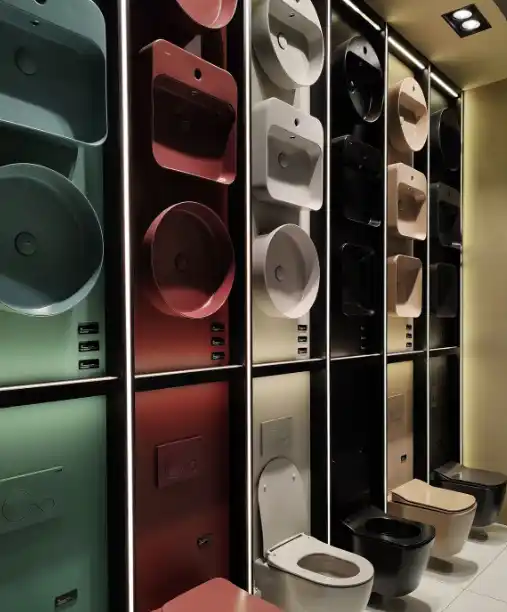
Bathroom Sanitary Ware in Calicut: A Pre-Purchase Checklist
Choosing sanitary ware in Calicut involves more than picking a design you like. Before you buy, check the toilet trap type, product dimensions, drainage position, installation type, flushing system, material, warranty and spare-part availability. Getting these right helps you avoid plumbing changes and fitting problems after the products arrive.
This guide works as a checklist you can carry to any sanitaryware showroom in Calicut. It covers new houses and renovations across Kerala, and explains each term in plain language. Kurikkal's earlier sanitaryware buying guide covers materials and brands; this article focuses on what to verify before you pay.
What Does Bathroom Sanitary Ware Include?
Bathroom sanitary ware means the ceramic fixtures in a bathroom, mainly toilets (water closets) and wash basins, along with items such as bidets and urinals. It is separate from bathroom fittings (taps, mixers, showers, diverters) and bathroom accessories (towel rods, soap holders, hooks).
The distinction matters at the showroom, because a toilet or basin is usually priced and specified separately from the tap, cistern fittings or seat that go with it.
|
Category |
What it includes |
What to check first |
|
Sanitaryware |
Western toilets, wash basins, bidets, urinals |
Dimensions, outlet position, installation type |
|
Bathroom fittings |
Taps, mixers, shower sets, diverters |
Compatibility with basin tap hole and plumbing |
|
Bathroom accessories |
Towel rods, soap holders, robe hooks |
Finish match with taps and wall tiles |
Sanitaryware itself breaks into three groups:
- Western toilets and closets: one-piece, two-piece, wall-mounted and floor-mounted types. Browse western toilet designs to see how the range is organised.
- Wash basins: wall-mounted, countertop, under-counter, pedestal and semi-recessed.
- Urinals and others: relevant mainly for guest toilets and commercial spaces.
Accessories are listed separately, and Kurikkal's bathroom accessories page is where to look for them.
What Should You Check Before Buying a Western Toilet?
Before buying a western toilet, check four things in order: the trap type (S-trap or P-trap), whether it is one-piece or two-piece, whether it is floor-mounted or wall-mounted, and its exact dimensions. Then confirm the flushing system. These are separate decisions, and mixing them up is a common source of errors.
1. Trap type: S-trap or P-trap
The trap decides where the toilet's waste outlet meets the drain. An S-trap toilet discharges downward through the floor, while a P-trap toilet discharges backward into a drain in the wall. Brand terminology varies, so check the data sheet, which normally states whether the outlet is vertical or horizontal.
Your existing plumbing decides which one you can use. A floor drain suits a floor outlet and a wall drain suits a wall outlet, and changing from one to the other usually needs plumbing work. Ask a qualified plumber to confirm before you order.
2. Construction: one-piece or two-piece
Construction describes how the toilet is made, not how it is fixed.
- One-piece: the bowl and cistern are a single ceramic unit. There is no tank-to-bowl joint to clean around, but you must check the weight and handling requirements.
- Two-piece (close-coupled): a separate cistern sits on the bowl. Parts are generally easier to replace individually, but the joint needs attention during cleaning.
3. Installation type: floor-mounted or wall-mounted
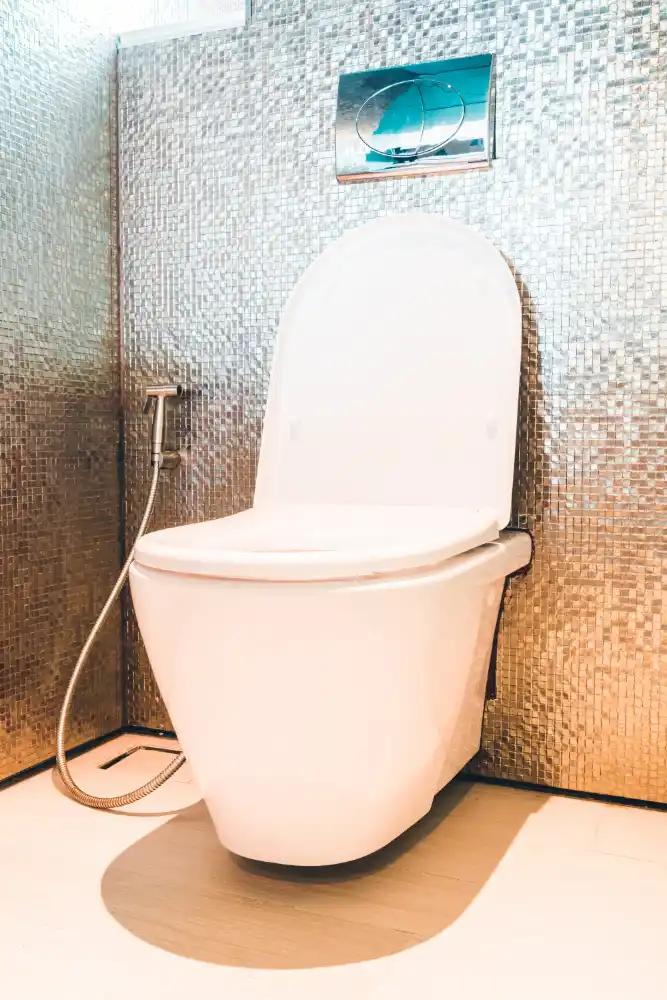
Installation type describes how the toilet is fixed. A floor-mounted toilet rests on the floor and bolts down. A wall-mounted toilet hangs on a support frame inside the wall, usually with a concealed cistern behind a flush plate.
Wall-mounted models need the frame position, wall construction and plumbing access planned early. See Kurikkal's wall-mounted toilets collection for the range, and ask what installation frame and accessories each model requires.
4. Dimensions and clearance
Check overall length, width, height, seat height and the distance from the wall to the waste outlet. Dimensions vary by manufacturer and model, so no single measurement fits every toilet. Kohler's toilet rough-in measurement guide explains that the rough-in is measured from the finished wall, not the baseboard, to the floor bolts. It covers products from other markets, so rely on the data sheet of the model you actually buy.
Also check clearance in front of the bowl and beside it, and whether the bathroom door can open without hitting the fixture.
5. Flushing system
Check the flushing mechanism, whether the cistern is included, and how the cistern connects to your water supply. Ask whether the bowl is rimmed or rimless and whether dual flush is offered. Instead of relying on performance claims, request the manufacturer's stated flush volumes and water pressure requirements for the model you want.
If the cistern is concealed, confirm how you reach the flush mechanism for repairs. Kurikkal's toilet sanitary fittings guide gives more background on closet types.
Western toilet buying checklist
- Existing drain position: floor or wall.
- Trap type matches the drain (S-trap or P-trap).
- One-piece or two-piece decided.
- Floor-mounted or wall-mounted decided, with frame requirements checked.
- Rough-in distance and overall dimensions taken from the product data sheet.
- Cistern included or sold separately.
- Seat cover included or sold separately.
- Flush mechanism and spare parts confirmed.
- Plumber consulted for any change to the plumbing.
How Do You Choose the Right Bathroom Wash Basin?
Choose a wash basin by matching its installation type to your counter, wall and plumbing, then check its size, tap hole layout and waste position. A basin that looks right can still clash with the counter cut-out or the tap you already picked.
|
Basin type |
How it is installed |
Best suited for |
Check before buying |
|
Wall-mounted |
Fixed directly to the wall |
Compact bathrooms, powder rooms |
Wall strength, pipe positions, visible plumbing |
|
Countertop |
Sits on top of the counter |
Bathrooms with a counter or vanity |
Counter height, tap height, splash |
|
Under-counter |
Fitted beneath the countertop |
Continuous counter look |
Counter material, cut-out size, support |
|
Pedestal |
Basin on a floor pedestal |
Traditional styles, guest bathrooms |
Pedestal hides pipes, limited counter space |
|
Semi-recessed |
Partly set into the counter |
Narrow counters |
Counter depth, projection from the counter edge |
Whatever type you choose, verify these points:
- Basin width and depth, against the available wall or counter space.
- Tap hole configuration, and whether your tap suits it.
- Waste outlet position and overflow provision, where applicable.
- Countertop dimensions and cut-out template.
- Cleaning access around the rim and joints.
If you are pairing a basin with a vanity, Kurikkal's vanity units and countertop guide covers counter and cabinet options.
What Are the Important Measurements to Check Before Buying Sanitaryware?
Take measurements of the room and the existing plumbing before you choose any product, because fit depends on both. Compare these against the manufacturer's product drawing, not against a rule of thumb.
- Bathroom length and width.
- Toilet installation area.
- Drainage outlet position.
- Wash basin width and depth.
- Countertop height.
- Clearance between fixtures.
- Shower area.
- Door opening space.
- Positions of water supply and waste connections.
There are no universal installation measurements for sanitaryware, because they differ by manufacturer and model. Ask the showroom for the product drawing or installation specification, and have a qualified plumber check your site before you finalise anything.
Which Sanitaryware Material and Finish Should You Choose?
Most bathroom sanitaryware is made of ceramic, often described as vitreous china, which has a glazed surface that is easy to wipe clean. No material is universally better than another, so judge each product by its manufacturer's specification and finish. For example, sanitaryware product specifications from Jaquar list the material, dimensions, net weight and care guidelines for a model. The same sheet warns that vitreous china is fragile and can chip if over-tightened.
Indian standards for vitreous china sanitary appliances are published by the Bureau of Indian Standards, including the IS 2556 standard for washdown water closets. Ask whether a model's documentation states compliance with the relevant part. If a showroom offers basins in other materials, ask for the manufacturer's care guide.
When you inspect a piece in person, check:
- Even glaze with no pinholes, rough patches or colour variation.
- No visible cracks or chips, especially at edges and around the trap.
- Consistent shade across matching items.
- Manufacturer cleaning instructions.
A good appearance alone does not prove durability. Treat it as one check among several.
How Do You Choose the Right Sanitaryware Design and Colour?
Pick the design and colour that suits your tiles, taps and lighting, and look at real samples before deciding. White is the most flexible choice, while black or coloured pieces need a more deliberate scheme.
Here are combinations homeowners commonly consider:
- White sanitaryware with beige or grey tiles for a calm, neutral look.
- White sanitaryware with marble-look wall tiles.
- Black sanitaryware with light-coloured tiles for contrast.
- Neutral sanitaryware against a textured feature wall.
Design styles range from contemporary and minimalist to traditional. Match the taps, shower fittings, accessories, countertop and lighting to one finish family. Bathroom lighting changes how glaze and tile colours look, so view samples under similar light.
What Should You Check About Quality, Warranty and Maintenance?
Check product quality in person, then read the warranty and confirm how repairs and spares work. Warranty terms vary by manufacturer and product, so get them in writing for the exact model.
- Product quality: glaze finish, visible defects and consistency across pieces.
- Warranty: duration, what it covers, installation-related exclusions and how service claims are handled.
- Maintenance: cleaning requirements, availability of replacement seats, covers and flushing parts, and access to concealed plumbing.
- After-sales support: official product documentation, service availability and spare parts supply.
In Kerala's humid climate, bathrooms stay damp for long periods, so easy cleaning and good ventilation matter. Avoid brand-versus-brand claims unless the manufacturer's own documents support them.
What Should You Ask Before Purchasing Sanitaryware at a Showroom?
Ask these questions before you pay, because the answers decide whether the product fits your bathroom and what the real total cost will be.
- What trap configuration is available for this toilet?
- What are the exact product dimensions?
- Is this model suitable for my existing drainage outlet?
- What is the flushing mechanism?
- Is the cistern included?
- What type of installation is required?
- Are installation accessories included?
- What are the warranty terms?
- Are replacement seats and components available?
- What is the maintenance requirement?
- Does the product require any plumbing modifications?
- Are there compatible taps and bathroom accessories?
- Is the product currently available?
- What is the total estimated purchase cost, including applicable accessories?
Manufacturer data sheets often list items such as the seat cover and gaskets as provided, while fixing bolts or a concealed cistern appear as recommended or separate items. Questions 5, 7 and 14 help you catch these gaps early.
What Is the Difference Between Buying Sanitaryware for a New House and a Bathroom Renovation?
In a new house you choose products first and fit the plumbing around them, while in a renovation the existing plumbing limits what you can choose. This changes the order of your decisions.
For new house construction:
- Plan the plumbing before selecting products.
- Match sanitaryware to the bathroom dimensions.
- Finalise concealed cisterns and plumbing systems early.
- Plan wash basin and countertop arrangements.
- Coordinate tiles, sanitaryware and fittings.
For a bathroom renovation:
- Inspect the existing plumbing.
- Identify the current trap configuration.
- Measure the available space.
- Check whether existing drainage connections can be reused.
- Allow for plumbing modifications.
- Check compatibility with existing tiles and fittings.
Renovations need extra care because old drain positions, wall thickness and tile build-up are fixed. Kurikkal's bathroom renovation in Kerala guide walks through the planning sequence.
What Are the Common Mistakes to Avoid When Buying Bathroom Sanitary Ware?
Most problems come from skipping a check that would have taken a few minutes. Avoid these:
- Choosing products based only on appearance.
- Not checking the toilet trap configuration.
- Ignoring bathroom dimensions.
- Buying a wash basin without checking countertop compatibility.
- Confusing wall-mounted and floor-mounted toilets.
- Not checking flushing system compatibility.
- Ignoring maintenance access for a concealed cistern.
- Not reading warranty conditions.
- Overlooking replacement parts.
- Not comparing product dimensions.
- Forgetting installation accessories.
- Not coordinating sanitaryware with bathroom fittings.
- Buying without reading the product specifications.
Where Can You Find Quality Bathroom Sanitary Ware in Calicut?
Kurikkal Ambiente is one place to explore sanitary ware in Calicut. Kurikkal began in 1981, and the Kurikkal Ambiente showroom is at Saubhagya Shopping Complex, Mavoor Road, Calicut. The Kajaria Eternity World showroom is at Gayathri Building, Kuthiravattam Link Road, Kozhikode.
If you are searching for the best sanitary ware shop in Calicut, judge any option by the checks in this article rather than by claims. Here is what the Kurikkal website shows:
- Toilet collections: the Sanitary Fittings category lists washdown, washout, rimless, floor-standing, wall-mounted, compact, smart and shower toilets, along with shower toilet seats.
- Brands: the site lists brands such as TOTO, Duravit, Villeroy & Boch, VitrA, Kohler, American Standard, CERA, Geberit and TECE. The Villeroy & Boch page, for instance, shows toilets, accessories and installation components.
- Bathroom range: the bathroom sanitary fittings category covers faucets, accessories and sanitary fittings.
- Wash basins and vanities: ask the showroom team about current basin ranges, since availability can change.
If you are comparing a premium sanitaryware showroom in Kozhikode, take the same checklist to each one. Compare dimensions, materials, plumbing compatibility, flushing system and warranty across models, and confirm availability with the team before you travel. You can send an enquiry through the website or call the showroom.
Frequently Asked Questions About Buying Bathroom Sanitary Ware
1. What does bathroom sanitary ware include?
It includes ceramic fixtures such as western toilets, wash basins, bidets and urinals. Taps, mixers and showers are bathroom fittings, and towel rods and soap holders are accessories.
2. What should I check before buying sanitaryware?
Check the toilet trap type, product dimensions, drain and water connection positions, installation type, flushing system, warranty and spare parts. Compare these against your bathroom's measurements and existing plumbing.
3. Which type of western toilet is best for Indian homes?
No type is best for every home. The right choice depends on your drain position, available space, installation preference and budget. Match the toilet to your plumbing first, then choose design and features.
4. What is the difference between an S-trap and P-trap toilet?
An S-trap toilet discharges downward through the floor, while a P-trap toilet discharges horizontally into a wall drain. Terminology varies by brand, so confirm outlet direction on the product data sheet.
5. How do I choose the right wash basin?
Match the basin type to your counter, wall and plumbing. Then check its size, tap hole layout, waste position, overflow provision and the countertop cut-out before buying.
6. What is the difference between a one-piece and two-piece toilet?
A one-piece toilet has the bowl and cistern as a single ceramic unit. A two-piece toilet has a separate cistern fitted onto the bowl. This describes construction, not how the toilet is mounted.
7. Which sanitaryware material is commonly used?
Ceramic, often vitreous china, is commonly used for toilets and basins. No material is universally superior, so check each manufacturer's specification, glaze quality and care instructions.
8. What measurements should I check before buying a western toilet?
Check the room size, drain position, the distance from the wall to the waste outlet, clearance around the toilet and door swing. Compare them with the model's manufacturer drawing.
9. Is wall-mounted sanitaryware suitable for small bathrooms?
It can be, because the bowl is lifted off the floor. It needs a support frame, a concealed cistern and planned plumbing access, so check wall construction and installation requirements before choosing.
10. What should I check about a toilet flushing system?
Check the flush mechanism, whether dual flush is offered, whether the cistern is included, the water pressure requirement and how spare parts and concealed components can be accessed.
11. How do I select sanitaryware for a bathroom renovation?
Inspect existing plumbing and identify the current trap and drain position first. Measure the space, then choose products that fit or budget for plumbing changes with a qualified plumber.
12. What warranty should I check before purchasing sanitaryware?
Ask for the warranty duration, what it covers, installation-related exclusions and how service claims work. Terms vary by manufacturer and product, so get them in writing for your model.
13. How do I coordinate sanitaryware with bathroom tiles?
View real samples under similar lighting. White pairs easily with beige, grey or marble-look tiles, while black sanitaryware looks best against lighter tiles. Match taps and accessories to one finish family.
14. Where can I find premium sanitary ware in Calicut?
Kurikkal Ambiente on Mavoor Road, Calicut, lists toilet collections and brands such as Duravit, Villeroy & Boch and TOTO on its website. Confirm current availability with the showroom.
15. What should I ask at a sanitaryware showroom before buying?
Ask about trap configuration, exact dimensions, drain suitability, flushing system, included accessories, installation needs, warranty, spare parts, availability and the total cost.
Conclusion
Before you buy bathroom sanitary ware in Calicut, check product dimensions, trap configuration, installation type, wash basin compatibility, material and finish, flushing system, warranty, maintenance access and plumbing compatibility. A few measurements and the right questions can save you from rework later.
To see toilets, wash basins and related bathroom products in person, explore Kurikkal Ambiente's collections or contact Kurikkal Ambiente email sales@kurikkal.com. Bring your bathroom measurements and a note of your existing drain position.