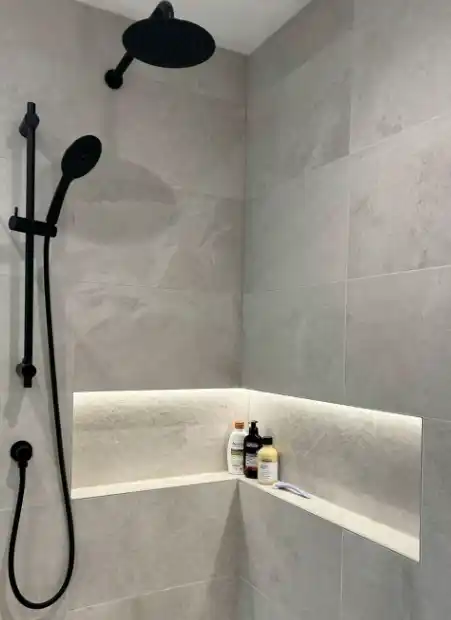
Bathroom Wall Tiles: Size, Finish and Colour Pairing with Sanitary Ware
Bathroom wall tiles shape how a bathroom looks, how bright it feels, how easily it cleans and how well it works with the wash basin, western toilet and fittings. A practical starting point for most homes is a medium or large-format tile in a light or neutral colour, in a finish that suits your lighting, checked against the sanitaryware before you buy. The right answer still depends on your bathroom dimensions and installation conditions.
Three factors drive most bathroom tile design decisions:
- Tile size: how tile dimensions change the proportions and visual continuity of the room.
- Tile finish: how glossy, matte, satin and textured surfaces affect appearance, light and cleaning.
- Colour pairing: how wall tiles sit with wash basins, western toilets and fittings.
This guide covers all three, plus lighting, floor-tile coordination, a buying checklist and common mistakes. It is written for homeowners in Calicut, Kozhikode and across Kerala who are building a new house or renovating.
Why Are Bathroom Wall Tiles Important in Bathroom Design?
Bathroom wall tiles protect wall surfaces in wet areas and set the visual tone of the room. They are also the largest surface your sanitaryware sits against, so colour and finish decisions start here.
Wall tiles influence:
- Protection: a suitable tile with proper waterproofing behind it keeps splashes away from the wall.
- Appearance: size, pattern and colour create a consistent design.
- Cleaning: finish, texture and grout joints decide how much effort upkeep needs.
- Colour and light: the same tile can look different under daylight, warm white and cool white lamps.
- Coordination: wall colour frames the wash basin, western toilet and fittings.
Whether a tile suits a wall depends on its intended application, water exposure, installation method and the manufacturer's specifications. In Kerala's humid climate, ventilation and waterproofing deserve as much thought as the tile itself. Our bathroom renovation guide for Kerala covers the planning steps in order.
What Are the Different Sizes of Bathroom Wall Tiles?
Bathroom wall tiles come in small, medium, large and extra-large formats. Sizes vary by manufacturer and collection, so treat the examples below as common reference points, not fixed standards. No single size suits every bathroom.
1. Small format tiles (for example 100 × 100 mm and 200 × 200 mm, where available)
- Suit decorative patterns, mosaics and accent sections.
- Create more grout joints, which add pattern but also more lines to clean.
- In compact bathrooms, use them selectively. A full wall of small tiles can look busy.
2. Medium format tiles (for example 300 × 600 mm)
- Versatile across most residential layouts.
- Can be laid horizontally or vertically. Vertical layouts draw the eye up, horizontal layouts widen the wall.
- Keep the tile size in proportion to the wall dimensions.
3. Large format tiles (for example 600 × 1200 mm)
- Show fewer grout joints than smaller tiles covering the same area.
- Give a contemporary, continuous look on larger walls.
- Need a flat substrate and careful handling. They do not automatically reduce installation cost, because skilled labour and wastage planning matter.
4. Extra-large and slab-style tiles
- Offer a near-seamless appearance where the layout allows. For reference, Kajaria's bathroom tile range lists formats such as 60 × 120 cm, 119 × 240 cm and 119 × 280 cm.
- Suit premium interiors with generous wall height.
- Need specialist handling, so use experienced installers.
|
Format |
Common examples |
Best suited to |
|
Small |
100 × 100, 200 × 200 mm |
Accents, mosaics, decorative bands |
|
Medium |
300 × 600 mm |
Most residential walls |
|
Large |
600 × 1200 mm |
Larger walls, contemporary designs |
|
Extra-large |
Slab-style formats |
Feature walls, premium projects |
To compare formats in person, browse Kurikkal's bathroom tile collections. For a closer look at format trade-offs, read the Kurikkal article on large format tiles vs standard tiles.
Which Bathroom Wall Tile Size Is Best for Small and Large Bathrooms?
For small bathrooms, medium or large tiles in light colours usually work well, because fewer joints give the walls a calmer look. For large bathrooms, large-format tiles and feature walls make good use of the space. Cutting, grout joints, wall dimensions and installation quality matter as much as the size you pick.
For small bathrooms
- Use medium or large formats where the layout allows, and plan cuts so that small slivers do not land at corners.
- Choose light colours and keep patterns restrained.
- Plan grout joints and match grout to the tile for a quieter surface.
- Scale tile size to compact sanitaryware.
For large bathrooms
- Use large-format tiles for a continuous look.
- Add one statement wall in a marble-look or stone-look design.
- Coordinate wall and floor tiles so the two surfaces read as one scheme.
|
Bathroom type |
Suggested tile format |
Design consideration |
|
Compact bathroom |
Small or medium formats |
Plan grout joints and cuts carefully |
|
Medium bathroom |
Medium or large formats |
Maintain visual balance |
|
Spacious bathroom |
Large or extra-large formats |
Consider feature walls and slab-style designs |
|
Accent wall |
Decorative or varied formats |
Coordinate patterns with sanitaryware |
These are general design suggestions, not mandatory rules.
What Are the Different Finishes Available for Bathroom Wall Tiles?
The main bathroom tile finishes are glossy, matte, satin, textured and metallic or special effects. Finish changes how a tile reflects light, how water marks show and how much effort cleaning takes. No finish is maintenance-free.
- Glossy finish: a reflective surface that looks bright and picks up available light. Water spots and fingerprints can be noticeable, so expect regular wiping.
- Matte finish: a non-glossy, subtle look that suits minimalist and contemporary designs. Cleaning ease depends on the surface texture.
- Satin finish: a soft sheen between glossy and matte. It is understated and works in contemporary interiors. Follow the manufacturer's care guidance.
- Textured finish: surface patterns and tactile detail, often stone-inspired. Popular for feature walls, though deeper textures can hold more dirt and need closer cleaning attention.
- Metallic and special finishes: decorative effects for accent walls that pair with premium fittings. Check surface-care instructions before buying.
|
Tile finish |
Appearance |
Design application |
Maintenance consideration |
|
Glossy |
Reflective |
Bright, polished interiors |
Water spots may be noticeable |
|
Matte |
Subtle, non-reflective |
Contemporary interiors |
Depends on surface texture |
|
Satin |
Soft sheen |
Balanced, understated designs |
Follow manufacturer guidance |
|
Textured |
Tactile and patterned |
Accent walls |
Deeper textures may need more cleaning attention |
|
Metallic |
Decorative sheen |
Feature areas |
Check surface-care instructions |
Wall tile finish and floor tile slip resistance are separate questions. A matte or textured wall tile does not automatically carry any particular slip-resistance rating, so check the data sheet for any tile you plan to use on a floor.
How Do You Choose the Right Bathroom Tile Colour?
Choose bathroom tile colour by looking at room size, lighting, sanitaryware colour and the mood you want. Lighter colours usually suit compact rooms. Darker colours suit well-lit rooms where you want contrast.
- White tiles: clean and timeless, good for compact bathrooms, and a natural partner for white sanitaryware. Contrasting fittings add definition.
- Beige and cream tiles: warm and neutral, suited to natural and contemporary schemes and to warm-toned fittings.
- Grey tiles: modern and versatile in light and dark shades. They pair with chrome or black fittings and with white sanitaryware.
- Brown and earth tones: natural and warm, often stone-inspired, and a good match for wood-look surfaces.
- Black and dark tiles: bold and contemporary, best on feature walls. They contrast strongly with white sanitaryware, but they show water marks and need good lighting.
- Green and blue tiles: refreshing accents for one wall or a niche, best with neutral sanitaryware and natural materials.
How Do You Pair Bathroom Wall Tiles with Sanitary Ware?
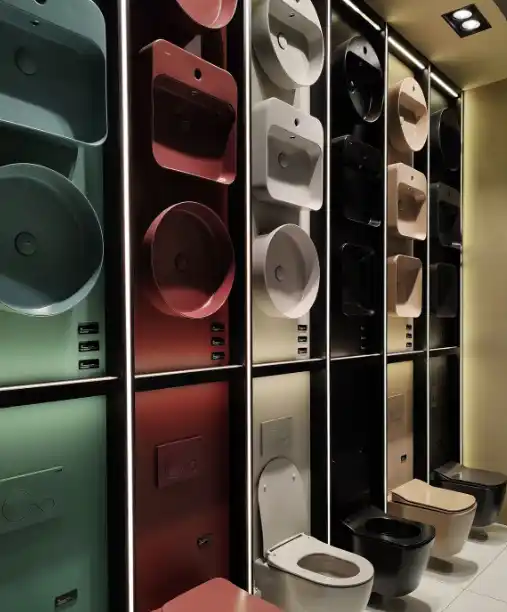
Pair bathroom wall tiles with sanitaryware by deciding whether you want harmony or contrast, then testing the combination with real samples. White sanitaryware works with almost any tile colour. Black and coloured sanitaryware need more careful backgrounds.
- White sanitaryware with neutral tiles. White wash basins and western toilets look timeless against beige, cream, light grey and white walls. This is the safest combination and suits many bathroom styles.
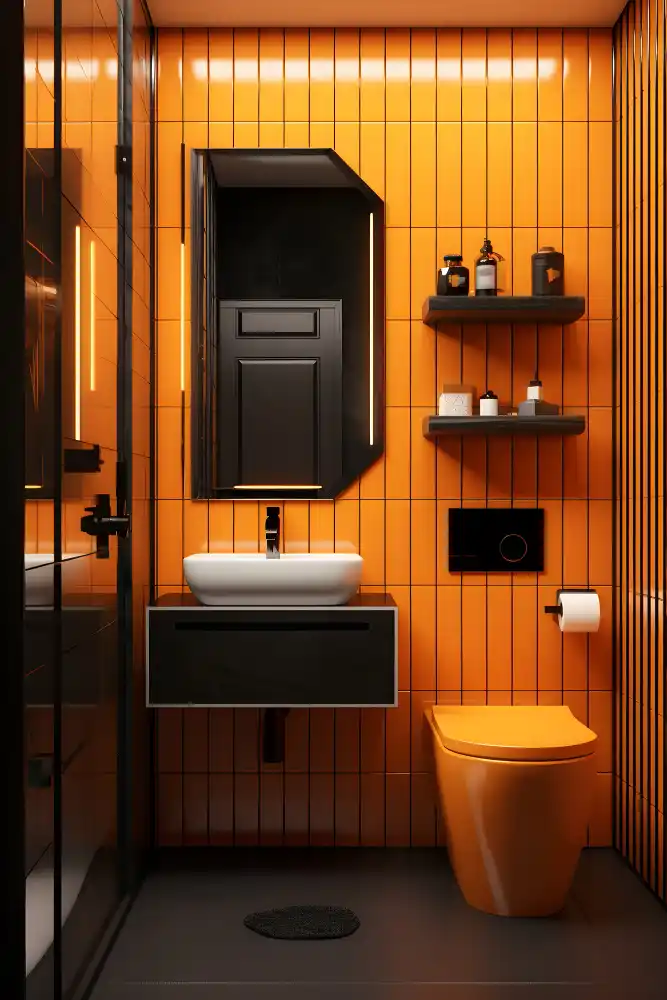
- White sanitaryware with dark tiles. Black, charcoal and deep grey walls make white fixtures stand out and give a modern look. Plan lighting carefully, since dark surfaces absorb light and show water marks.
- Coloured sanitaryware with neutral tiles. A neutral background lets a coloured basin or toilet take centre stage. Avoid adding a strongly coloured wall as well, or the two will compete.
- Black sanitaryware with light tiles. Black fixtures against white, beige or light grey tiles give a contrast-led design that pairs well with black fittings.
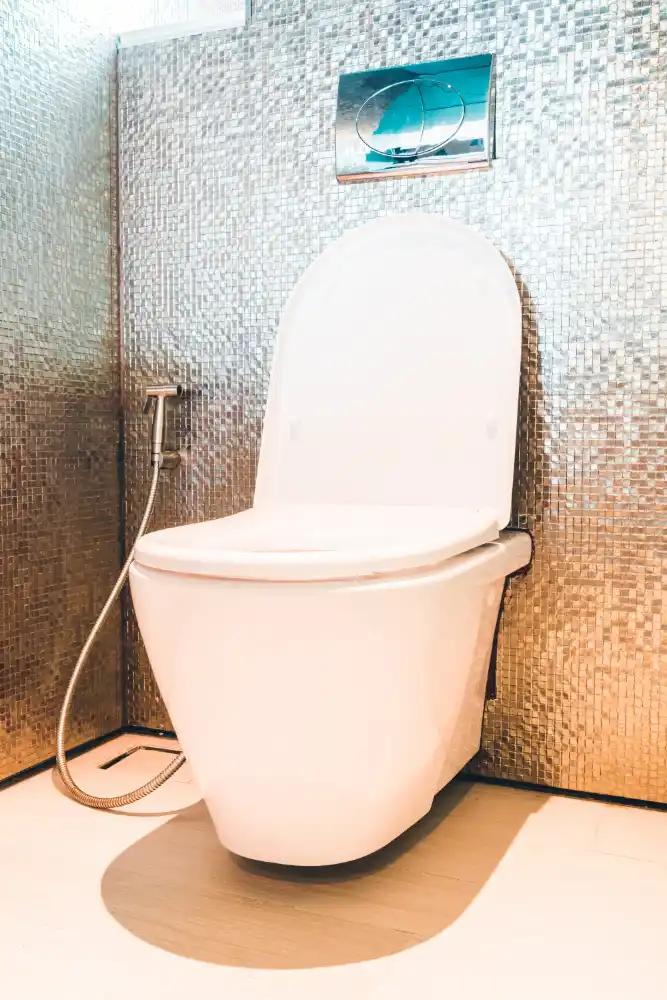
- Stone-look tiles with white sanitaryware. Marble-look and stone-look tiles bring a natural, warm or neutral appearance that white fixtures complement. Remember that this describes the tile's look, not its material.
- Matching tiles with bathroom fittings.
- Chrome fittings suit neutral tiles.
- Matte black fittings suit contrasting wall colours.
- Brushed gold suits warm-toned tiles.
- Brushed nickel suits subtle, contemporary interiors.
For fittings, see Kurikkal's article on how to match bathroom accessories in chrome, matte black and brushed gold.
|
Sanitaryware colour |
Recommended tile colours |
Overall design style |
|
White |
Beige, grey, white, marble-look |
Timeless and versatile |
|
Black |
White, cream, light grey |
Contemporary contrast |
|
Coloured |
Neutral and complementary shades |
Coordinated statement design |
|
Warm-toned |
Beige, cream, earth tones |
Warm and natural |
|
Grey |
White, charcoal, soft beige |
Modern and minimal |
These are design suggestions, not fixed rules. Always place a tile sample next to a sanitaryware sample, because white and off-white vary between brands and batches. For product context, explore the sanitaryware collection and the sanitaryware buying guide. Manufacturers such as RAK Ceramics India make both tiles and sanitaryware, so their product details help when you compare dimensions and finishes.
How Do You Combine Bathroom Wall Tiles and Floor Tiles?
Combine wall and floor tiles by keeping one surface calmer than the other and linking them through colour family, grout or texture. Matching collections are simple; contrast adds definition.
- Matching collections: a coordinated wall and floor set gives easy continuity.
- Contrasting colours: a light wall with a darker floor grounds the room.
- Similar colour families: different tiles in the same tone keep the scheme calm.
- Different textures: a smooth wall with a textured floor separates the surfaces.
- Grout colour: match grout to the tile for a seamless look, or contrast it for a pattern effect.
- Room size and light: compact or dim bathrooms benefit from less contrast.
Bathroom floors need tiles suited to wet areas, with appropriate slip resistance. Do not assume a wall tile is suitable for a floor. Confirm this on the manufacturer's data sheet. Kurikkal's guide on how to mix and match wall and floor tiles adds more layout ideas.
How Does Bathroom Lighting Affect Tile Colour and Finish?
Lighting changes how tile colour and finish appear. The same tile can look warmer, cooler, brighter or flatter depending on the light source.
- Natural light: shows true colour but varies through the day, and many bathrooms have only small windows.
- Warm white lighting: adds a yellow cast that flatters beige, cream and wood tones.
- Cool white lighting: makes whites and greys look crisper and can make beige look flatter.
- Light placement: side and overhead lights create different shadows on textured tiles.
- Glossy tiles: reflect fixtures and windows, which can cause glare.
- Matte tiles: diffuse light and look softer.
- Dark tiles: absorb light, so they need good illumination.
View physical samples under your actual bathroom lighting before buying. Kurikkal's article on layered lighting in modern bathrooms explains how to plan the lighting early.
What Should You Check Before Buying Bathroom Wall Tiles?
Before buying, check dimensions, material, size, finish, colour coordination, technical specifications and installation needs. Use this checklist.
- Bathroom dimensions: wall height and width, total tile coverage, layout and cutting.
- Tile material: ceramic and porcelain are different bodies. Porcelain, which dealers in India often call vitrified, has lower water absorption than most ceramic wall tiles. Bureau of Indian Standards documentation for IS 15622 classifies pressed ceramic tiles into water-absorption groups, so ask for the group and figure on the data sheet. A tile's look (marble-look, stone-look) tells you nothing about its material.
- Tile size: available wall space, grout joint planning, pattern alignment, installation needs.
- Surface finish: glossy, matte, satin or textured, with the cleaning effort each needs.
- Colour coordination: sanitaryware colour, fittings, floor tile and lighting.
- Technical specifications: water absorption, intended application, thickness and dimensions, manufacturer recommendations. Do not rely on any claim about durability, stain resistance or slip resistance that the data sheet does not support.
- Installation and maintenance: adhesive and grout as recommended by the manufacturer, waterproofing, cleaning instructions and availability of replacement tiles. Large formats and complex layouts call for professional installation. Kurikkal explains the steps in waterproofing before tiling.
Buy extra tiles for cutting and future repairs, and keep the batch number, since shade can differ between batches.
What Are the Common Mistakes to Avoid When Choosing Bathroom Wall Tiles?
The most common mistakes come from choosing on looks alone and skipping samples.
- Selecting tiles on appearance only.
- Ignoring bathroom dimensions.
- Choosing a finish that does not suit the room or your cleaning habits.
- Mixing too many colours and patterns.
- Not considering sanitaryware colour.
- Ignoring bathroom lighting.
- Using wall tiles on the floor without checking suitability.
- Choosing large tiles without checking the wall and installation conditions.
- Ignoring grout colour.
- Not buying enough tiles for cutting and future replacement.
- Not checking manufacturer specifications.
- Not considering maintenance, including water marks and mineral deposits that can show on glossy and dark surfaces depending on local water quality.
Where Can You Find Quality Bathroom Tiles and Sanitaryware in Calicut?
Kurikkal Ambiente is a relevant stop for anyone searching for a bathroom tiles shop in Calicut, a bathroom tiles showroom in Calicut or sanitaryware in Calicut. According to its website, the group began as Kurikkal Tiles in 1981, and the site now covers tiles, bathroom, kitchen and wellness categories.
Here is what the official website shows:
- Bathroom wall tiles in Calicut: the Floor and Wall category includes a Bathroom Tiles listing. The site lists tile brands such as Kajaria Eternity, RAK Ceramics, Simpolo Ceramics and Somany, and the product gallery includes large formats such as 120 × 240 cm and 80 × 260 cm. See the Kajaria Eternity brand page.
- Sanitaryware: toilet categories include washdown, rimless, wall-mounted, floor-standing, compact and smart toilets. Listed sanitaryware brands include TOTO, Villeroy & Boch, Duravit, VitrA, Kohler, American Standard and CERA.
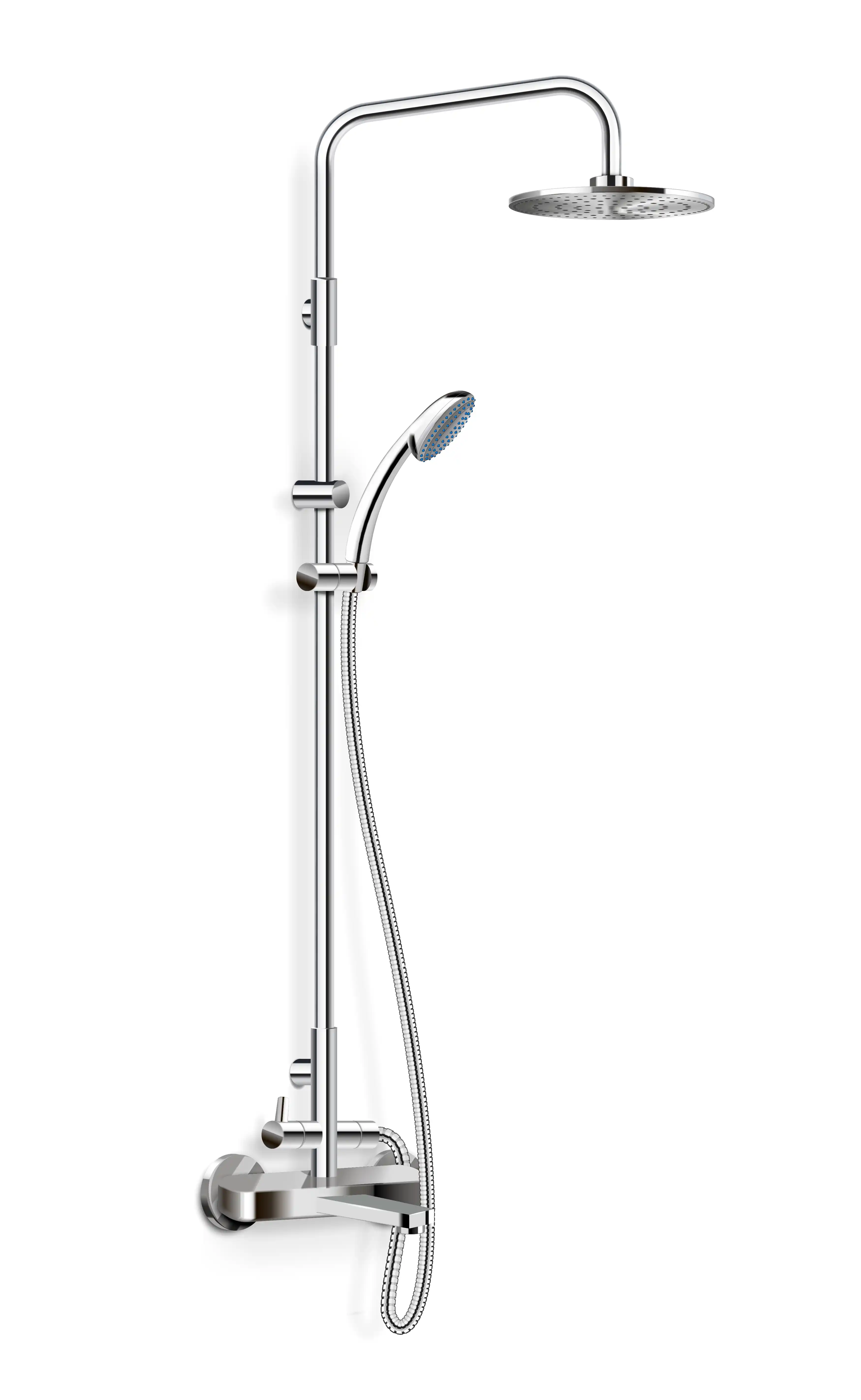
- Bathroom fittings in Calicut: the Bathroom menu lists faucets, accessories and sanitary fittings, with brands such as Hansgrohe, Grohe, Axor and Auga.
- Enquiries: a Quick Enquiry form asks you to choose a product requirement, a shop and a project type.
The main address on the website is Kurikkal Ambiente, Saubhagya Shopping Complex, Mavoor Road, Calicut (+91 94 46 46 27 27). The Kajaria Eternity World showroom is listed at Gayathri Building, Kuthiravattam Link Road, Kozhikode 673004. Confirm current collections, availability and visiting hours with the showroom before you travel.
This matters for bathroom tiles and sanitaryware in Calicut because the wall tile, wash basin, western toilet and fittings should be judged together. Bring your bathroom dimensions and, if possible, photos of the space, and compare tile samples with sanitaryware and fittings side by side before you finalise anything.
Frequently Asked Questions About Bathroom Wall Tiles
1. Which size of tiles is best for bathroom walls?
There is no single best size. Medium formats such as 300 × 600 mm suit most residential walls, and large formats such as 600 × 1200 mm suit bigger walls. Choose by wall dimensions, layout and cutting, and confirm the installer can handle the format.
2. Are large format tiles suitable for small bathrooms?
Often yes, because fewer joints can make walls look calmer. They need a flat wall, careful cutting and experienced installation. In a very compact bathroom, a medium format may be easier to fit without awkward cuts.
3. What is the difference between glossy and matte bathroom tiles?
Glossy tiles reflect light and look bright, but water spots and marks show more. Matte tiles are non-reflective and look softer. Cleaning ease depends on surface texture, and neither finish is maintenance-free.
4. Which finish is best for bathroom wall tiles?
There is no universal best. Matte and satin suit contemporary, low-glare looks. Glossy suits bright, polished schemes. Textured works on feature walls. Match the finish to your lighting and how much cleaning you are prepared to do.
5. Which colour is best for bathroom wall tiles?
White, beige and light grey are the safest choices and suit most sanitaryware. Darker colours work as feature walls in well-lit rooms. Pick the colour after viewing samples under your actual bathroom lighting.
6. What colour bathroom tiles go well with white sanitaryware?
White sanitaryware works with beige, cream, grey, white and marble-look tiles for a timeless look. Charcoal and black walls give strong contrast. Check that the white of the tile and the fixture sit well together.
7. Which bathroom tiles look good with black sanitaryware?
White, cream and light grey tiles give the clearest contrast with black sanitaryware. Match fittings to the scheme, for example matte black taps with light walls, and avoid heavy patterns that compete with the fixtures.
8. How do I match bathroom wall tiles with a wash basin?
Decide between harmony and contrast. For harmony, pick a tile in the same colour family as the basin. For contrast, pair a white basin with a darker wall. Place a tile sample beside the basin sample before buying.
9. Should bathroom wall and floor tiles match?
Not necessarily. Matching sets give continuity, while contrasting tiles add definition. Keep one surface calmer than the other. Floor tiles must also suit wet areas and have appropriate slip resistance, so do not assume a wall tile can be used on the floor.
10. Are textured tiles suitable for bathroom walls?
Yes, as feature walls or accents. Deeper textures can collect dirt and water marks, so they need closer cleaning attention. Check the manufacturer's care instructions, and use texture on one wall rather than every surface.
11. Are glossy tiles suitable for small bathrooms?
They can be, because they reflect light and look bright. Glare and water spots are the trade-offs. Test samples under your lighting and consider satin or light matte tiles if reflections feel harsh.
12. How do I choose bathroom tiles for a modern home?
Start with neutral colours in medium or large formats, keep grout joints narrow and colour-matched, and add one feature wall in marble-look or stone-look tiles. Coordinate fittings in one finish, such as matte black or chrome.
13. Which bathroom tile colours are suitable for homes in Kerala?
Light and neutral colours such as white, beige and light grey suit many Kerala homes, especially bathrooms with small windows. Treat this as a design starting point and decide from samples seen under your own lighting and ventilation.
14. What should I check before buying bathroom wall tiles?
Check wall dimensions, material, size, finish, colour fit with sanitaryware and floor, water absorption and other data-sheet specifications, and the installation method. Plan waterproofing and buy extra tiles from one batch.
15. Where can I buy quality bathroom tiles in Calicut?
Kurikkal Ambiente at Saubhagya Shopping Complex, Mavoor Road, Calicut lists bathroom tiles, sanitaryware and fittings on its website. Check current collections and availability with the showroom before visiting.
Conclusion
The best bathroom wall tile is the one that fits your bathroom dimensions, finish needs, lighting and sanitaryware, and can be installed properly. Choose the size first, then the finish, then the colour. Test the shortlist with real samples next to the wash basin, western toilet and fittings. Check the floor tile and the manufacturer's data sheet, and plan waterproofing and maintenance before you buy.
To see tiles, sanitaryware and fittings together, explore the collections at Kurikkal Ambiente, or send your requirements through the Kurikkal Ambiente contact page.